
Main Courses
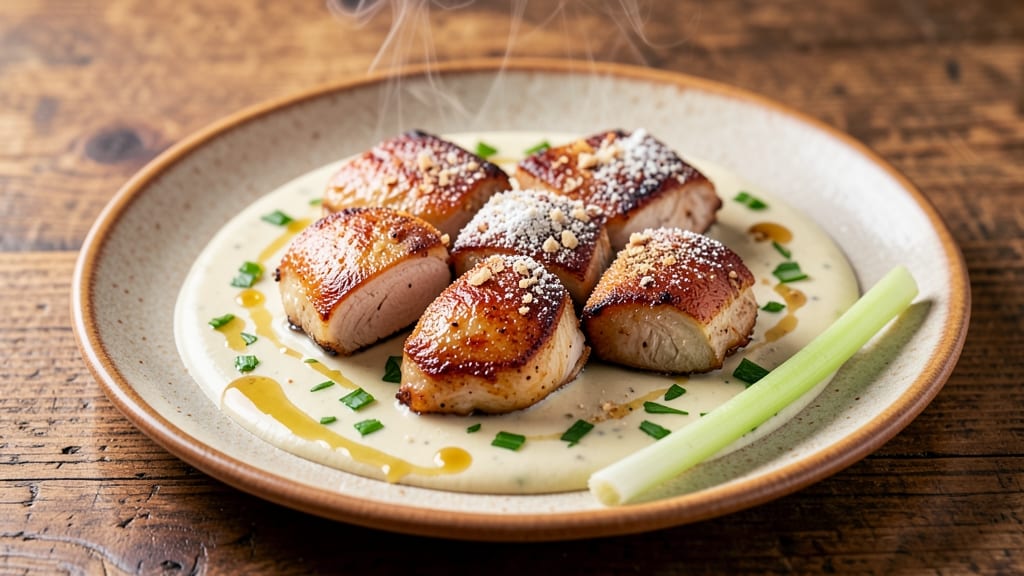
Transforming classic Campbell's soup into a rich, velouté-inspired chicken dish delivers restaurant-quality comfort with minimal effort. This creamy celery-vinegar velouté recipe builds on Campbell's velouté base, blending tangy vinegar with celery's earthy notes for a sauce that clings perfectly to tender chicken pieces.
I developed this method after years of testing how to elevate canned soup into a gourmet main course—no shortcuts, just refined technique.
The foundation of this dish is Campbell's velouté soup, which provides the creamy base without requiring heavy cream. Celery and vinegar create a bright, aromatic layer that complements the soup's natural richness, while chicken thighs stay juicy and tender through gentle braising.
What sets this apart is the velouté's velvety texture—achieved by whisking the soup with a touch of cornstarch for extra smoothness without altering its signature flavor.
By the time you serve this dish, you'll have golden-brown chicken swimming in a glossy, creamy sauce that's both comforting and sophisticated. The celery-vinegar velouté adds depth that transforms a simple soup into an elegant main course, perfect for weeknight dinners or special occasions.
Every bite delivers that perfect balance of tangy, creamy, and savory flavors—exactly what makes this recipe worth the effort.
Pair with crusty bread to soak up every drop of velouté or serve alongside steamed vegetables for a complete meal. The recipe scales easily for gatherings, and leftovers reheat beautifully. Here's how to create this velouté-inspired masterpiece using Campbell's as your secret weapon.
Ingredients for campbell's chicken
Transform classic Campbell's velouté into velvety chicken perfection with these 13 essential ingredients.
| Ingredient | Amount | Notes |
|---|---|---|
| Campbell's Creamy Celery Velouté Soup 🍲 | 2 cans | 10.5 oz each, standard canned version |
| Boneless, Skinless Chicken Thighs 🍗 | 1 ½ lb | Cut into 1-inch cubes, uniform size |
| White Wine Vinegar 🍶 | ½ cup | Dry, not balsamic, for brightness |
| Celery Stalks 🧅 | 3 whole | Fresh, trimmed, roughly chopped |
| All-Purpose Flour 🌾 | 1 tbsp | For velouté thickening, sifted |
| Unsalted Butter 🧈 | 2 tbsp | Cold, cut into small cubes |
| Garlic Cloves 🧄 | 3 cloves | Minced, fresh for aroma |
| Diamond Crystal Kosher Salt 🧂 | 1 ½ tsp | Adjust to taste, fine grain |
| Freshly Ground Black Pepper 🌶️ | ½ tsp | Cracked peppercorns preferred |
| Heavy Cream 🥛 | ¼ cup | Optional, for extra richness |
| Fresh Parsley 🌿 | ¼ cup | Chopped, for garnish, stems removed |
| Olive Oil 🫒 | 1 tbsp | Extra-virgin, for searing |
| Cornstarch 🌾 | 1 tsp | For velouté smoothness, dissolved |
The Campbell's velouté forms the creamy foundation, so grab the 10.5-ounce cans—the standard size with proper celery flavor. Chicken thighs are non-negotiable here; their fat content keeps them juicy during the gentle braising process. Butcher sections often sell pre-cubed thighs, saving you prep time. For vinegar, white wine vinegar delivers the bright acidity that cuts through the soup's richness without overpowering it. Fresh celery is critical—look for stalks with vibrant green tops at specialty markets like Whole Foods or Trader Joe's for the freshest flavor. The flour and cornstarch work together to create that signature velouté texture without altering the soup's essence.
No white wine vinegar? Apple cider vinegar works in a pinch, though it adds subtle sweetness. Substituting chicken breasts? Use 1.25 lbs and pound to even thickness—they'll dry out faster. The heavy cream is optional but recommended for restaurant-quality richness; if omitting, add an extra 0.25 cup of milk. For flour, all-purpose works best—cake flour makes the sauce gummy. Fresh parsley can be swapped for 1 tsp dried parsley, but the color and freshness are worth the effort. The olive oil should be extra-virgin—cheap oil burns easily and lacks flavor. If you're short on cornstarch, arrowroot powder at the same amount works equally well for thickening.
Store the Campbell's soup cans in a cool, dark pantry for up to 12 months—once opened, transfer to an airtight container and refrigerate for 3 days. Fresh celery keeps 1 week wrapped in a damp towel in the fridge, while chicken thighs can be refrigerated for 2 days or frozen for 6 months. The finished dish reheats beautifully—simmer gently on low heat for 5 minutes to restore its velvety texture. For meal prep, portion into glass containers with a layer of plastic wrap pressed directly on the sauce to prevent skin formation. Garnish with parsley just before serving to maintain its vibrant color and fresh aroma.
Why You'll Love This Recipe
- Here’s what sold me: this dish begs for seconds, which means I get to turn tomorrow’s lunch into yesterday’s dinner. Toss the leftovers in a skillet with a splash of broth, and suddenly you’ve got a creamy chicken stir-fry that’s still packed with flavor.
- Pantry Magic Ready: I swear by this one—no fancy shopping list, just what’s already lurking in your cabinets. That creamy celery soup base? It’s the MVP here, cutting prep time in half while still delivering restaurant-worthy depth.
- Velvet-Smooth Surprise: The flour coating on those chicken thighs? Absolute genius. It soaks up the tangy white wine vinegar and celery broth like a sponge, giving you that crispy-tender texture where the outside snaps and the inside melts—no fancy marinating required.
- Leftover Reinvention: Here’s what sold me: this dish begs for seconds, which means I get to turn tomorrow’s lunch into yesterday’s dinner. Toss the leftovers in a skillet with a splash of broth, and suddenly you’ve got a creamy chicken stir-fry that’s still packed with flavor.
Step-by-step instructions for creamy celery-vinegar velouté chicken
This method transforms simple ingredients into a velvety, restaurant-worthy dish with perfect texture.
Sear the Chicken Thighs for Depth of Flavor
Pat the 1.5 lb boneless, skinless chicken thighs completely dry with paper towels. Cut them into 1-inch cubes for even cooking. Heat 1 tablespoon olive oil in a large skillet over medium-high heat until shimmering. Working in batches if needed, add the chicken cubes in a single layer and sear for 4-5 minutes per side until golden brown and cooked through to an internal temperature of 165°F. The edges should develop a rich caramelization that forms the flavor base for the sauce.
Remove the chicken from the skillet and set it aside on a plate. The residual fat in the pan will become the foundation for your velouté. If the pan appears dry, add 1 tablespoon unsalted butter to maintain moisture for the sauce development. This step creates the Maillard reaction that transforms simple chicken into deeply flavorful protein.
Build the Velouté Base with Celery and Vinegar
In the same skillet, add 3 whole celery stalks (roughly chopped) and cook for 3-4 minutes until softened and slightly caramelized. Add 3 cloves garlic cloves (minced) and cook for 30 seconds until fragrant—this prevents the garlic from burning while extracting its aromatic oils. Pour in 0.5 cup white wine vinegar and scrape up any browned bits from the bottom of the pan using a wooden spoon. This deglazing captures all the flavor compounds you've built.
Simmer the vinegar mixture for 2-3 minutes until reduced by half, intensifying its acidity and creating a bright contrast to the richness of the cream. The vinegar's acidity helps tenderize the chicken further and balances the velouté's creaminess. This reduction step is critical for developing the dish's signature tangy depth.
Thicken the Velouté with Campbell's Creamy Base
Open the 2 cans Campbell's Creamy Celery Velouté Soup and pour them into the skillet with the celery-vinegar mixture. Stir well to combine, then bring the mixture to a gentle simmer over medium heat. Sprinkle 1 tablespoon all-purpose flour and 1 teaspoon cornstarch over the surface, whisking constantly for 1-2 minutes until the sauce thickens to a smooth, velvety consistency. The cornstarch acts as a natural thickener that creates that signature velouté texture without altering the flavor profile.
Season with 1.5 teaspoons diamond crystal kosher salt and 0.5 teaspoon freshly ground black pepper, adjusting to taste. The salt enhances all the flavors while the pepper adds a subtle heat that balances the dish. If the sauce appears too thick, whisk in 1-2 tablespoons hot water to reach your desired consistency. This step transforms the canned soup into a luxurious velouté that coats the chicken perfectly.
Finish with Cream and Garnish
Return the seared chicken to the skillet and gently stir to coat each piece with the velouté sauce. Stir in 0.25 cup heavy cream and simmer for 2-3 minutes until the chicken is heated through and the sauce has emulsified into a silky texture. The cream adds luxurious richness while maintaining the dish's balance. Taste and adjust seasoning one final time, as the cream can dilute the flavors slightly.
Remove from heat and stir in 0.25 cup chopped fresh parsley just before serving. The parsley adds freshness and visual contrast to the creamy sauce. Ladle the chicken and velouté into serving bowls, ensuring each portion has an even distribution of chicken and sauce. The final dish should be creamy yet not heavy, with bright celery and vinegar notes that cut through the richness.
Pro Tips For Making Campbell'S Chicken
- Trim Chicken Properly: Cut those chicken thighs lengthwise down the fat cap—not across—so they flatten out evenly in the pan. I learned this the hard way when my first batch curled into sad little rolls instead of crispy, even sears. Use kitchen shears for speed, but a sharp knife works too if you’re patient.
- Flour First, Then Salt: Dredge the chicken thighs in flour before salting them—it locks in the seasoning better than sprinkling later. I used to salt first, and half the flavor would wash off when I added the soup. Trust me, the crust sticks like glue this way.
- Deglaze with Vinegar: After browning the chicken, splash in the white wine vinegar immediately—it cuts through the richness and lifts all the stuck-on bits off the pan. Skip this, and you’ll end up with a dull, sticky sauce instead of something bright and balanced.
- Simmer Low and Slow: Once the soup’s added, drop the heat to a gentle simmer (tiny bubbles, not a rolling boil). I used to rush it, and the chicken turned out rubbery. Let it cook uncovered for 15–20 minutes—just until the chicken hits 165°F internally. Patience here makes all the difference.
Serving suggestions for this recipe
Bread Pairings
Crusty sourdough or baguette slices are my go-to for soaking up every drop of velouté. Toast the bread lightly with garlic butter—just mix 2 tbsp softened butter with 1 minced garlic clove and a pinch of salt—then serve alongside the dish.
The bread's chewy texture contrasts beautifully with the creamy sauce, making it a must-have addition. 🥖
Vegetable Sides
Steamed green beans with a sprinkle of almond slices add a fresh, crunchy element that balances the richness. Toss 1 lb green beans with 1 tbsp olive oil, ½ tsp salt, and ¼ tsp black pepper, then steam for 5-6 minutes until tender-crisp.
For a heartier option, roasted carrots with honey glaze (mix 1 tbsp honey and 1 tsp Dijon mustard) complement the dish’s tangy notes perfectly. 🥕
Garnish Ideas
Fresh chives or lemon zest add a bright pop of color and acidity that cuts through the creaminess. Thinly slice 2 tbsp chives and sprinkle over each serving, or zest ½ lemon for a citrusy finish.
For extra flair, add toasted breadcrumbs (toast 2 tbsp panko in a dry pan for 2 minutes) for texture contrast. 🍋
Wine Pairings
A crisp Chardonnay with subtle oak notes enhances the creamy velouté while complementing the vinegar’s brightness. Look for a California Chardonnay like Kendall-Jackson or a Burgundy Chardonnay for a more refined match. For white wine lovers, a Sauvignon Blanc with its citrusy profile also works beautifully. 🍷
Presentation Tips
Serve the chicken and velouté in deep, wide bowls to showcase the creamy sauce’s glossy finish. Garnish with a parsley sprig and a drizzle of truffle oil (just ½ tsp) for a restaurant-worthy touch.
For a family-style presentation, arrange the chicken and sauce in a cast-iron skillet and let guests serve themselves. 🍽️
Nutrition facts
Frequently asked questions
Can I substitute Campbell's Creamy Celery Velouté with another soup?
You can use other creamy soups like Campbell's Cream of Mushroom or Chicken Noodle, but the celery-vinegar flavor profile is key. For a similar taste, blend 1 can celery soup with ½ cup heavy cream and ¼ cup white wine vinegar to mimic the velouté's brightness. The vinegar is essential for balancing the richness.
Why does the recipe call for chicken thighs instead of breasts?
Chicken thighs stay juicy and tender during the gentle braising process, while breasts can dry out. The fat content in thighs also adds depth to the sauce. If using breasts, pound them to ½-inch thickness and reduce cooking time to 3-4 minutes after adding them back to the sauce.
Can I make this dish ahead of time?
Yes! Prepare the chicken and sauce up to 2 days in advance and refrigerate in an airtight container. Reheat gently on low heat for 5-7 minutes, stirring occasionally, until warmed through. Add fresh parsley just before serving to maintain its vibrant color. For freezing, portion into containers with plastic wrap pressed directly on the sauce to prevent skin formation.
What if my velouté sauce is too thick or too thin?
For a thicker sauce, whisk in 1 teaspoon cornstarch mixed with 1 tablespoon cold water. For a thinner sauce, gradually add 1-2 tablespoons hot water while whisking. The key is to adjust gradually—thickening is easier to fix than thinning.
Is this recipe kid-friendly?
While delicious, the vinegar and celery flavors might be too bold for young children. For a milder version, reduce the vinegar to ¼ cup and blend the celery until smooth. Serve with buttered noodles or mashed potatoes to make it more appealing to picky eaters. The creamy texture remains comforting regardless.