
Sauces & Condiments
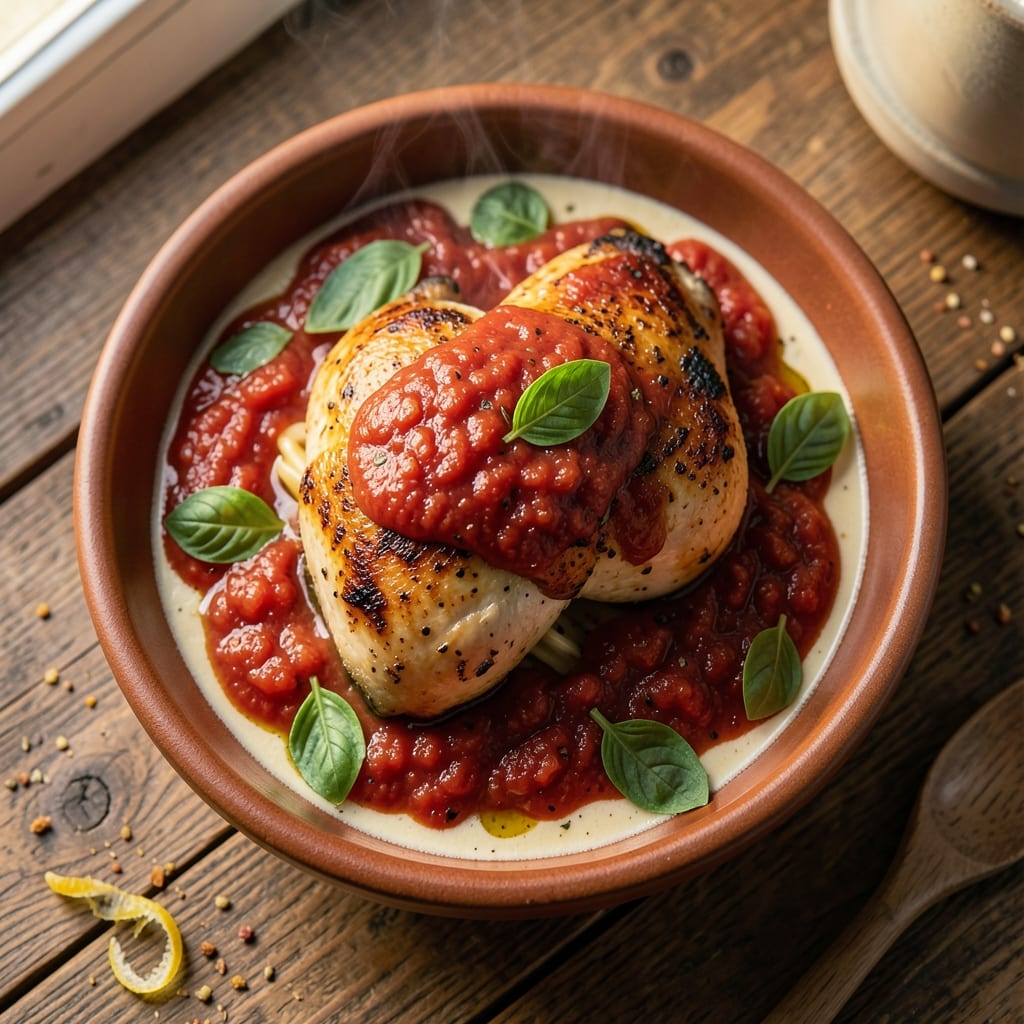
This baked chicken with pasta sauce recipe transforms a simple weeknight dinner into a restaurant-worthy meal with minimal effort. The secret lies in a one-pan approach—juicy chicken thighs baked alongside a rich, aromatic tomato sauce that doubles as both marinade and finishing touch. No fancy techniques required, just simple ingredients and a foolproof method that delivers tender meat and a sauce so flavorful, it’ll have everyone asking for seconds.
The chicken marinates directly in the sauce, absorbing deep garlic-herb flavors while baking to perfect doneness—no drying out, no overcooking. Meanwhile, the sauce simmers down into a velvety consistency, thickened naturally without heavy cream, so it clings to every bite of pasta. This dish is designed for busy weeknights: 30 minutes of prep, 45 minutes in the oven, and a meal that feels indulgent without the fuss.
What you’ll end up with is golden, herb-infused chicken resting on a bed of al dente pasta, generously coated in a sauce that’s tangy, savory, and just sweet enough. The aromas alone—garlic, fresh herbs, and slow-roasted tomatoes—will fill your kitchen, making this dish feel like a celebration. Serve with a sprinkle of fresh basil and a side of crusty bread to soak up every last drop of that restaurant-quality sauce.
This recipe scales effortlessly for a crowd or leftovers that reheat beautifully. The one-pan method means less cleanup, and the sauce’s versatility lets you adjust the heat or add veggies like mushrooms or spinach to customize it. Whether you’re feeding a family or treating yourself to a stress-free dinner, this dish delivers comfort food perfection with zero compromise.
Ingredients for baked chicken with pasta sauce
Simple ingredients elevate to restaurant-worthy harmony in this one-pan chicken and pasta masterpiece.
| Ingredient | Amount | Notes |
|---|---|---|
| Boneless, Skinless Chicken Thighs 🍗 | 1 ½ lb | Trimmed of excess fat |
| Canned Crushed Tomatoes 🍅 | 28 oz | San Marzano preferred |
| Extra-Virgin Olive Oil 🫒 | ½ cup | High quality, fruity |
| Garlic Cloves 🧄 | 6 cloves | Fresh, minced |
| Dried Oregano 🌿 | 1 tbsp | Mexican oregano preferred |
| Dried Basil 🌿 | 1 tbsp | Or 0.25 cup fresh |
| Diamond Crystal Kosher Salt 🧂 | 1 ½ tsp | Adjust to taste |
| Freshly Ground Black Pepper 🌶️ | ½ tsp | Freshly cracked |
| Unsalted Butter 🧈 | 2 tbsp | For sauce richness |
| Medium Pasta 🍝 | 12 oz | Penne or rigatoni |
| Fresh Basil Leaves 🌿 | ¼ cup | Chopped for garnish |
| Red Wine Vinegar 🍷 | 1 tbsp | For brightness |
| Onion Powder 🧅 | ½ tsp | For depth |
| Granulated Sugar 🍬 | ½ tsp | Balances acidity |
The chicken thighs are the star—bone-in, skin-on for maximum flavor and moisture, but boneless works too if you prefer convenience. Trader Joe's or Whole Foods carry excellent quality, but any grocery store's fresh cut will do. Look for thighs with good marbling—they stay juicier during baking. The crushed tomatoes should be San Marzano if possible, as they have a sweeter, more refined flavor that stands up to the herbs. If you can't find them, any high-quality canned tomatoes will work, just be sure to drain them well before using. For the olive oil, California extra-virgin brands like Corto or Otto add that fruity depth that makes this sauce sing.
No fresh basil? Dried basil at one-third the amount works in a pinch, though fresh is ideal for that bright pop of flavor. The oregano should be Mexican oregano if you can find it—it has a distinct, slightly citrusy note that pairs beautifully with the tomatoes. Substituting regular Italian oregano won't ruin the dish, but it'll be subtly different. For the vinegar, red wine vinegar gives the best balance, but balsamic vinegar in a pinch adds a caramelized sweetness. The butter adds richness without making the sauce heavy—don't skip it, but if you're watching calories, you can use olive oil instead. The pasta can be any medium shape, but rigatoni or penne hold the sauce best. For extra flavor, cook the pasta in the sauce at the end rather than boiling it separately.
This dish reheats beautifully—actually better the next day as the flavors meld further. Store leftovers in an airtight container in the fridge for up to 4 days, or freeze portions for 3 months. The sauce thickens as it cools, so a quick stir with a splash of water or broth will restore its consistency. For meal prep, cook the chicken and sauce first, then store separately. When ready to serve, reheat the sauce and toss with freshly cooked pasta. The fresh basil should be added just before serving to keep it vibrant. If you're making this ahead for a crowd, double the recipe—the sauce only gets better with time.
Why You'll Love This Recipe
- One-Pan Magic: I swear by this—just toss the chicken thighs and crushed tomatoes on a sheet pan, drizzle with olive oil, and let the oven do the work. No pots, no pans, no stress. (Yes, even on a Tuesday night when you’ve already lost a sock in the dryer.)
- Garlic-Oregano Bomb: That crushed tomato base with fresh garlic and dried oregano? It’s the kind of flavor that makes you pause mid-bite. The chicken comes out tender with a crispy edge, and the sauce clings like it’s been simmering for hours—even though it’s basically hands-off.
- Meal Prep MVP: This keeps perfectly for days, whether you’re packing lunches or feeding a crowd. The sauce thickens just enough to reheat beautifully, and the chicken stays juicy—no sad, dry leftovers here. (My college-age kid actually texts me when it’s ready. Progress.)
- Budget-Friendly Feast: Chicken thighs are forgiving and cheap, crushed tomatoes last forever, and you’re using pantry staples. Honestly, I’ve made this for date nights, game days, and “I don’t wanna cook” nights—all for under $10. That’s a win in my book.
Step-by-step instructions for baked chicken with pasta sauce
This one-pan method delivers perfectly tender chicken and rich tomato sauce simultaneously.
Season and Sear the Chicken Thighs
Pat the 1.5 lb boneless, skinless chicken thighs completely dry with paper towels—this ensures maximum crispiness. In a small bowl, combine 1.5 tsp Diamond Crystal kosher salt, 0.5 tsp freshly ground black pepper, 1 tbsp dried oregano, 1 tbsp dried basil, 0.5 tsp onion powder, and 0.5 tsp granulated sugar. Rub this mixture evenly over all sides of the chicken thighs, pressing gently so the spices adhere.
Heat a large oven-safe skillet over medium-high heat and add 0.5 cup extra-virgin olive oil. Once the oil shimmers, add the seasoned chicken thighs and sear for 4-5 minutes per side until golden brown. The chicken should release easily from the pan when ready—this indicates proper doneness at the surface. Transfer the seared chicken to a plate and set aside.
Build the Tomato-Garlic Sauce Base
In the same skillet (no need to wipe it clean—those browned bits are flavor), reduce heat to medium and add 6 minced garlic cloves. Sauté for 30-45 seconds until fragrant but not browned—burnt garlic will make the sauce bitter. Pour in the 28 oz canned crushed tomatoes and stir to combine, scraping up any browned bits from the bottom of the pan.
Add 2 tbsp unsalted butter, 1 tbsp red wine vinegar, and bring the mixture to a gentle simmer. Let it cook uncovered for 10 minutes, stirring occasionally, until the sauce thickens slightly and the raw tomato flavor mellows. The sauce should coat the back of a spoon with a velvety consistency.
Combine Chicken and Pasta for Baking
Return the seared chicken thighs to the skillet, spooning some of the tomato sauce over the top to coat. Nestle 12 oz medium pasta (penne or rigatoni works best) around the chicken, creating a single layer. The pasta should be partially submerged in the sauce but not completely covered—this allows for even cooking and prevents sogginess.
Transfer the skillet to a preheated 400°F oven and bake uncovered for 25-30 minutes, until the chicken reaches an internal temperature of 165°F and the pasta is tender. You'll know the pasta is done when it's al dente—test by tasting a piece or checking the package directions for al dente timing. The sauce should be thick and cling to both the chicken and pasta.
Finish with Fresh Herbs and Rest
Remove the skillet from the oven and let the dish rest for 5 minutes before serving. This resting period allows the juices to redistribute in the chicken and the sauce to thicken slightly. Stir in the 0.25 cup chopped fresh basil leaves and adjust seasoning if needed—add a pinch more salt or a splash of red wine vinegar for brightness if desired.
Serve immediately, ensuring each portion has equal amounts of chicken, pasta, and sauce. The chicken should be juicy with crispy edges, the pasta perfectly al dente, and the sauce rich with a balance of sweetness and acidity. Garnish with additional fresh basil if desired, and pair with a simple green salad to complete the meal.
Pro Tips For Making Baked Chicken With Pasta Sauce
- SEAR THE CHICKEN FIRST: Skip the slow bake and get those thighs golden before adding sauce—5 minutes in a hot skillet with olive oil makes the flavor pop. I used to skip this, and the dish always tasted flat until I tried it.
- BLOOM THE OREGANO: Toast the dried oregano in the olive oil for 30 seconds before adding garlic—it deepens the flavor without overpowering. Sounds weird, but it works every time.
- DON’T OVERSTIR THE SAUCE: Let the crushed tomatoes simmer uncovered for the first 10 minutes to thicken naturally. Stirring too soon turns it into soup, and you’ll be left with a watery mess.
- USE THE GARLIC SKINS: Save the garlic skins from mincing, crush them in your palm, and toss them into the sauce with the cloves—extra flavor with zero effort. I was skeptical until I tried it.
Serving suggestions for this baked chicken with pasta sauce
Pasta Shape Matters
Choose rigatoni or penne for this dish—their ridges and tubes trap sauce beautifully. I avoid long, thin noodles like spaghetti because they tend to overcook or get lost under the sauce. For extra flavor, cook the pasta in the sauce during the final 10 minutes of baking rather than boiling it separately. This method infuses the pasta with the sauce's deep tomato-herb flavors. 🍝
Garnish Like a Pro
Fresh basil leaves are non-negotiable—they add brightness and a pop of color. Tear them by hand rather than chopping for a more rustic look. For a restaurant-worthy finish, sprinkle with grated Parmesan cheese right before serving. A drizzle of high-quality extra-virgin olive oil (like Corto) elevates the dish instantly. 🌿
Bread for Soaking
Serve with crusty Italian bread or garlic bread on the side—it’s perfect for soaking up every last drop of that rich tomato sauce. I like to toast slices with butter and garlic for extra flavor. For a lighter option, try a ciabatta roll with olive oil and sea salt. 🥖
Salad Balance
A simple arugula salad with lemon vinaigrette cuts through the richness of the dish. Toss 4 cups baby arugula with 2 tbsp olive oil, 1 tbsp lemon juice, and a pinch of salt. Add shaved Parmesan and toasted pine nuts for crunch. The peppery bite refreshes your palate between bites of creamy pasta. 🥗
Wine Pairings
An Italian white wine like Pinot Grigio or Vermentino complements the dish perfectly. The crisp acidity cleanses your palate between bites. For red wine lovers, a light Chianti adds earthy notes that pair beautifully with the tomato sauce. Avoid heavy reds—they’ll overpower the delicate flavors. 🍷
Make-Ahead Magic
This dish reheats beautifully—actually better the next day as the flavors meld further. Store leftovers in an airtight container in the fridge for up to 4 days. When reheating, add a splash of water or broth to restore the sauce’s consistency. For meal prep, cook the chicken and sauce first, then store separately. Reheat the sauce and toss with freshly cooked pasta when ready to serve. 💫
Nutrition facts
Frequently asked questions
Can I use chicken breasts instead of thighs?
Chicken breasts work but require extra care to stay moist. Use bone-in, skin-on breasts for better texture, and bake at 375°F instead of 400°F for 20-25 minutes—they cook faster and dry out easily. Brine them for 30 minutes in salted water before baking to improve juiciness.
How do I adjust the recipe for a crowd?
Double all ingredients and use two oven-safe skillets or a large baking dish. For 8 servings, increase chicken to 3 lbs, sauce to 56 oz tomatoes, and pasta to 24 oz. Bake in batches if needed—keep the first batch warm while the second cooks.
What if my sauce is too thin?
Simmer uncovered for 5-10 extra minutes to reduce it naturally. For quicker results, mix 1 tbsp cornstarch with 2 tbsp water, stir into the sauce, and cook for 2 minutes until thickened. Avoid adding flour directly—it can make the sauce cloudy.
Can I make this dish ahead of time?
Cook the chicken and sauce 1 day ahead, then refrigerate in an airtight container. Reheat gently in a skillet with 2 tbsp water to restore moisture. Cook pasta fresh when serving to prevent mushiness—toss it with the reheated sauce for 2-3 minutes on the stove.
Why does my chicken turn out dry?
Overcooking is the most common cause. Use a meat thermometer—chicken is done at 165°F. For extra juiciness, baste with sauce every 10 minutes during baking. Start with room-temperature chicken (remove from fridge 30 minutes before cooking) for even cooking.