
Main Courses
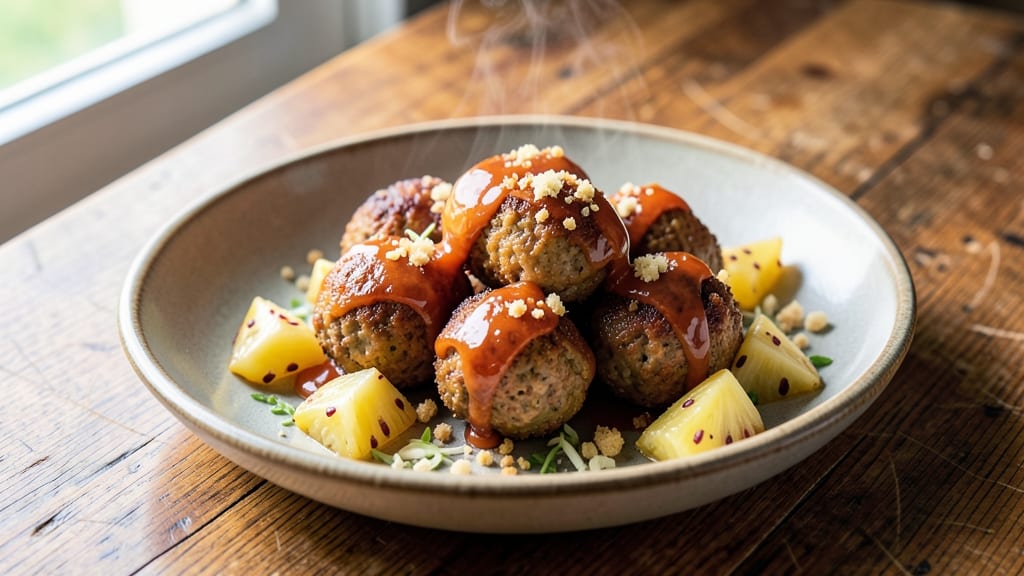
Recreating Trader Joe's pineapple teriyaki chicken meatballs at home delivers that same sweet-tangy glaze that clings perfectly to every bite.
The secret lies in tenderizing the chicken with pineapple juice and ginger before shaping it into meatballs, then baking them until golden—all while the homemade teriyaki sauce simmers into a sticky, aromatic perfection.
I perfected this recipe after years of testing, and it's now a staple in my Portland dinner rotation, especially when we're craving something sweet, savory, and effortlessly impressive.
This recipe combines the best of comfort food and restaurant-quality technique: juicy meatballs with crisp edges, a sauce that's balanced between sweet pineapple and umami teriyaki, and a method that ensures the glaze sticks without being overly sticky.
The chicken remains tender while absorbing the marinade's flavors, and the sauce reduces just enough to coat every bite—no watery aftermath here. It's the kind of dish that transforms a simple weeknight into a flavor experience worth sharing.
By the time you serve these meatballs, you'll have a plate that looks and tastes like it came straight from Trader Joe's—golden meatballs nestled in a glossy teriyaki sauce, ready to be paired with steamed jasmine rice or a simple stir-fry of vegetables.
The aroma alone will have everyone gathering around the table, and the first bite delivers that perfect balance of sweet, tangy, and savory that makes this dish so addictive. Let's get started on recreating this crowd-pleaser.
What makes this recipe truly foolproof is the homemade teriyaki sauce, which uses simple pantry staples to create depth and complexity. The sauce's caramelized edges and perfect consistency come from simmering it just until it thickens, ensuring it clings to the meatballs without overwhelming them.
Serve these meatballs with a side of steamed broccoli or a quick cucumber salad for a complete meal that's as balanced as it is delicious.
Ingredients for trader joe's pineapple teriyaki chicken meatballs
Pantry staples meet tropical sweetness—these ingredients bring Trader Joe's magic home.
| Ingredient | Amount | Notes |
|---|---|---|
| Boneless, Skinless Chicken Breast 🍗 | 1 ½ lb | Ground or finely chopped for meatballs |
| Fresh Pineapple Juice 🍍 | ½ cup | From fresh pineapple, not canned |
| Fresh Ginger Root 🌿 | 2 tbsp | Finely grated, aromatic |
| Large Egg 🥚 | 1 whole | Room temperature for binding |
| Panko Breadcrumbs 🍞 | ½ cup | Light and crispy texture |
| Minced Garlic 🧄 | 3 cloves | Freshly minced for flavor |
| Soy Sauce 🥢 | ¼ cup | Low-sodium preferred |
| Honey 🍯 | ¼ cup | Wildflower for depth |
| Sesame Oil 🫒 | 1 tbsp | Toasted sesame oil |
| Rice Vinegar 🍶 | 1 tbsp | White vinegar substitute |
| Garlic Powder 🧄 | 1 tsp | For extra umami |
| Ground Black Pepper 🌶️ | ½ tsp | Freshly cracked |
| Diamond Crystal Kosher Salt 🧂 | 1 tsp | For seasoning |
| Cornstarch 🌾 | 1 tbsp | For sauce thickening |
| Sesame Seeds 🌰 | 1 tbsp | Toasted for garnish |
The chicken is your canvas here—Trader Joe's frozen chicken breast strips work perfectly if you're short on time, but fresh is ideal. Look for high-quality, fresh pineapple at the store; the juice should be vibrant and sweet—not that murky canned stuff. Fresh ginger is non-negotiable for that bright, zesty kick. Costco or Whole Foods bulk sections have the best ginger roots, but any grocery store's produce aisle will do. Toast your sesame seeds in a dry pan for 30 seconds—they'll add a nutty crunch that elevates every bite.
No fresh ginger? Ground ginger at half the amount works in a pinch, but it lacks that fresh punch. Swap honey for maple syrup if you're avoiding refined sugar, though the flavor profile shifts slightly. For extra richness, add 1 tbsp peanut butter to the teriyaki sauce—it balances the sweetness beautifully. The cornstarch is your secret weapon for that glossy, clingy glaze. If you're gluten-free, use arrowroot powder instead. And if you can't find toasted sesame oil, regular sesame oil plus a pinch of smoked paprika mimics the flavor.
This sauce keeps for 1 week in the fridge, but the meatballs? They reheat like a dream—just pop them in a skillet with a splash of water for 3-4 minutes until heated through. Freeze the meatballs before baking, then thaw and finish in the oven. The sauce freezes beautifully too, though it may thicken slightly—just stir in a splash of water when reheating. Double the batch and freeze half; you'll thank me later when you're craving that sweet-tangy flavor on a lazy Tuesday.
Why You'll Love This Recipe
- No-Fuss Assembly: I swear, these meatballs take less effort than ordering takeout. Just pulse chicken, egg, ginger, and panko in a food processor—no hand-chopping, no overmixing. The pineapple juice does all the work binding them together while keeping them juicy.
- Tropical Crunch: That bright, sticky teriyaki glaze? It’s the ginger and pineapple juice working magic. The meatballs stay tender inside with a golden crust, and the sauce—sweet, tangy, and just a little spicy—makes every bite feel like a mini vacation.
- Lunchbox Hero: Between us, these are my go-to for meal prep. Toss them cold in a container with rice and steamed veggies, or reheat them for a quick dinner. My kids eat them straight from the fridge—no complaints, just empty lunchboxes.
- Budget Win: Chicken breast is cheap, and a single pineapple lasts for weeks. I make a double batch, freeze half, and still have leftovers for days. It’s the kind of recipe where you spend less but eat like you’re at a restaurant.
Step-by-step instructions for Trader Joe's-inspired pineapple teriyaki chicken meatballs
Here's how to create tender meatballs with a glaze so perfect it rivals the store-bought version.
Create the Glaze Base
In a medium saucepan, combine the 0.5 cup fresh pineapple juice, 0.25 cup soy sauce, 0.25 cup honey, 1 tablespoon rice vinegar, 2 tablespoons freshly grated ginger root, and 3 cloves minced garlic. Bring to a gentle simmer over medium heat and let it reduce by half—about 8-10 minutes—until it thickens slightly and becomes aromatic.
Here's the thing—this reduction is crucial. It concentrates the flavors and creates that signature sweet-tangy balance. Stir occasionally, but don't walk away; you want to prevent scorching. The glaze should coat the back of a spoon smoothly when ready.
Prepare the Meatball Mixture
In a separate bowl, finely chop the 1.5 lb boneless, skinless chicken breast using a sharp knife or food processor. The smaller the pieces, the more tender the meatballs will be. Add the 1 whole large egg, 0.5 cup panko breadcrumbs, 1 teaspoon garlic powder, 0.5 teaspoon ground black pepper, and 1 teaspoon diamond crystal kosher salt. Mix gently with your hands until just combined—overmixing develops gluten, which can make the meatballs tough.
This is where texture matters. The panko gives structure, while the egg binds everything together. Don't skip the hand-mixing—it ensures even distribution of seasoning and creates that perfect bite.
Form and Cook the Meatballs
Roll the mixture into 1.5-inch meatballs—about 16 total—keeping them uniform in size for even cooking. Heat 1 tablespoon sesame oil in a large skillet over medium-high heat. Working in batches, add the meatballs in a single layer and cook for 3-4 minutes per side until golden brown and cooked through. They should reach an internal temperature of 165°F when checked with a meat thermometer.
Don't overcrowd the pan—this ensures they brown properly instead of steaming. If they release easily from the pan, they're ready. Transfer to a plate and tent loosely with foil to keep warm.
Finish with the Glaze
Return the skillet to medium heat and add the reduced glaze. Bring to a gentle simmer, then stir in 1 tablespoon cornstarch to thicken. Cook for 2-3 minutes until the sauce coats the back of a spoon. Add the cooked meatballs back to the skillet and toss gently to coat them evenly in the glaze.
This is the moment that matters: the glaze should cling beautifully, creating that glossy, sticky exterior we all love. If it's too thick, add 1 tablespoon water to loosen it. Let the meatballs sit in the sauce for 1-2 minutes to absorb the flavors fully.
Garnish and Serve
Transfer the meatballs to a serving platter and sprinkle with 1 tablespoon toasted sesame seeds. Serve immediately over steamed rice or noodles for that authentic Trader Joe's experience. The glaze should be sticky yet not overly sweet, with a perfect balance of tangy, umami, and tropical notes.
Real talk: these meatballs are even better the next day when the flavors meld further. Store leftovers in the fridge for up to 3 days or freeze for 3 months—just reheat gently to preserve that perfect texture.
Pro Tips For Making Trader Joe'S Pineapple Teriyaki Chicken Meatballs
- Pulse Chicken Twice: After chopping the chicken breast into small pieces, pulse them in your food processor once—just until they’re broken down, not paste. Then pulse again with the egg and ginger to bind everything properly. I learned this the hard way when my meatballs fell apart because the chicken wasn’t fully integrated with the wet ingredients.
- Use Cold Pineapple Juice: Chill the pineapple juice in the fridge for at least 30 minutes before mixing it into the teriyaki sauce. Cold juice prevents the sauce from curdling when you add it to the hot pan, and it keeps the ginger’s sharpness from mellowing too fast. Trust me, the flavor stays brighter this way.
- Don’t Overmix the Batter: Once you fold in the panko, stop stirring after 10 seconds—just enough to coat the chicken. Overworking it makes the meatballs dense and chewy. I used to think more mixing meant better binding, but now I know less is more for that tender, juicy bite.
- Pan-Fry in Batches: Cook the meatballs in a single layer over medium-high heat—no crowding—and let them sear for 2 full minutes before flipping. Rushing this step means they’ll steam instead of brown, and the teriyaki sauce won’t cling properly. Your future self will notice the difference.
Essential equipment for trader joe's pineapple teriyaki chicken meatballs
Skillet Essentials
The right skillet makes all the difference for golden-brown meatballs and a glossy glaze. I swear by a 12-inch cast iron skillet like the Lodge Pre-Seasoned—it retains heat beautifully and develops a natural nonstick surface over time.
If you don’t own cast iron, a stainless steel skillet with a glass lid (like All-Clad Stainless) works too, though you’ll need to monitor heat more closely. 🔥
Heat Control Tools
Precision matters when balancing caramelization and even cooking. A kitchen thermometer (I love the Thermoworks Thermapen) helps maintain the perfect medium-high heat (around 375°F) for searing. For the glaze reduction, a small saucepan with sloped sides (like Le Creuset Stoneware) prevents spills while concentrating flavors.
Pro tip: Use a heat diffuser if your stovetop runs hot—it prevents scorching the glaze.
Mixing & Rolling
For the meatball mixture, a large mixing bowl (preferably stainless steel for durability) and a pair of silicone spatulas (like OXO Good Grips) make handling sticky ingredients easier.
To roll uniform meatballs, I use a meatball maker (the Norpro Mini Meatball Maker is a game-changer), but a small ice cream scoop or wet hands work in a pinch. The goal is 1.5-inch spheres—consistency ensures even cooking.
Sauce Thickening
The glaze’s texture hinges on proper thickening. A small whisk (like Mercer Culinary Genius) helps dissolve the cornstarch smoothly into the sauce. For extra gloss, I add 1 teaspoon honey at the end—it mimics Trader Joe’s signature shine.
A fine-mesh strainer (like OXO Good Grips) removes any lumps from the sauce before coating the meatballs, ensuring a silky finish.
Garnish & Serve
Toasted sesame seeds need a dry nonstick skillet—I use a small stainless steel pan to avoid burning. For serving, a wooden spoon (like Maplewood Craft) or tongs helps transfer meatballs without breaking them.
A large serving platter (preferably ceramic or stoneware) keeps everything warm and showcases the dish beautifully. 💫
Nutrition facts
Frequently asked questions
Can I use frozen chicken breast instead of fresh for these meatballs?
Thaw the 1.5 lb frozen chicken breast in the fridge overnight or use the quick microwave method (on defrost setting). Pat it completely dry before chopping—this prevents soggy meatballs. The texture will be just as tender when cooked properly.
What if my teriyaki sauce turns out too thin or too thick?
For a thinner sauce, add 1 tablespoon water at a time while stirring. For thicker sauce, mix 1 teaspoon cornstarch with 1 tablespoon water, stir into the sauce, and simmer for 1-2 minutes. The goal is a consistency that coats the back of a spoon without dripping.
Can I bake these meatballs instead of pan-searing?
Yes! Preheat oven to 400°F and bake meatballs on a parchment-lined tray for 15-18 minutes until golden. For extra crispiness, broil for 1-2 minutes at the end. After baking, toss in the teriyaki sauce in the oven for 5 minutes to finish.
How do I store leftovers to keep the meatballs tender?
Store meatballs and sauce separately in airtight containers for up to 3 days. To reheat, warm sauce in a pan first, then add meatballs for 2-3 minutes on low heat with a splash of water. Microwaving can make them rubbery—avoid it!
What's the best way to make this gluten-free?
Swap panko for gluten-free breadcrumbs (or crushed gluten-free crackers) and use arrowroot powder instead of cornstarch. Check your soy sauce is tamari-based. The flavor stays rich, just with a slightly lighter texture.