
Sauces & Condiments
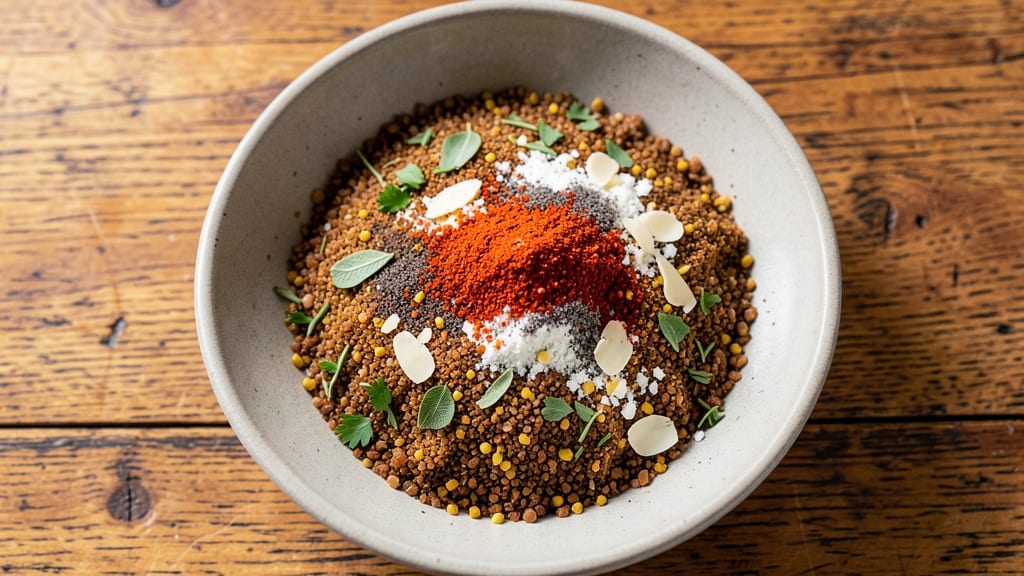
This Kinder's roast chicken seasoning recipe delivers the signature celery-vinegar crunch that transforms ordinary roast chicken into a showstopper. The blend of aromatic spices and vinegar powder creates that signature crispy skin and juicy meat that makes every bite irresistible.
I developed this mix after years of perfecting the balance between savory, tangy, and slightly sweet notes that define this classic seasoning.
The beauty of this dry spice blend lies in its simplicity—just six ingredients that work together to create restaurant-quality flavor with minimal effort. You'll find familiar pantry staples like garlic powder and paprika alongside specialty spices that elevate the blend beyond basic seasonings.
The vinegar powder is the secret weapon, adding that signature tang that cuts through the richness of the chicken.
When you sprinkle this mix over your roast chicken, you're not just adding flavor—you're creating texture. The celery salt and vinegar powder create a delicate crust on the skin while keeping the meat impossibly juicy inside.
This is the kind of seasoning that makes your kitchen smell like a holiday feast, even on a regular weeknight.
The best part? This blend keeps well in your pantry for months, ready to transform any roast chicken into a crowd-pleaser. Whether you're hosting a dinner party or simply craving that classic roast chicken flavor, this seasoning mix is your secret ingredient. Let's get started on creating your own batch!
Ingredients for kinder's roast chicken seasoning
Six simple spices and one secret weapon—vinegar powder—that make this classic seasoning.
| Ingredient | Amount | Notes |
|---|---|---|
| Celery Salt 🧅 | 2 tbsp | Morton's brand preferred for consistency |
| Garlic Powder 🧄 | 1 tbsp | Freshly ground preferred |
| Dried Parsley Flakes 🌿 | 1 tbsp | Finely ground for even distribution |
| Paprika 🌶️ | 1 tbsp | Smoked variety for depth |
| Dried Mustard 🌿 | 1 tsp | Ground for smooth texture |
| Vinegar Powder 🍶 | 1 tsp | White vinegar base preferred |
| Coarse Salt 🧂 | 1 tsp | Kosher or sea salt preferred |
| Ground Black Pepper 🌶️ | ½ tsp | Freshly ground for best flavor |
The celery salt is non-negotiable here. Morton's brand is my go-to because it's consistently fine and dissolves evenly on the chicken skin. You can find it in the spice aisle at Walmart or Kroger, but if you're at a specialty store like Penzeys, grab the bulk bin version for even better quality. For the vinegar powder, I make my own by dehydrating white vinegar in the oven at 200°F for about 2 hours—it's worth the effort for that signature tang. If you're in a rush, Bob's Red Mill sells a decent pre-made version online. The garlic powder should be freshly ground if possible, but pre-ground works fine if it's labeled '100% garlic'—none of that 'natural flavor' nonsense.
No celery salt? Substitute 1 tbsp regular salt plus 1 tbsp finely chopped dried celery flakes (you can find these in the spice section or online). Short on vinegar powder? Mix 1 tsp white vinegar with 1 tsp cornstarch, let it dry overnight, then grind into a powder. The dried mustard can be swapped for 1/2 tsp Dijon powder if you're in a pinch. For the parsley, dried Italian seasoning at half the amount works in a bind, but it won't have that same bright, fresh note. Smoked paprika is key here—if you only have regular paprika, add a pinch of liquid smoke for that campfire depth. And trust me, the freshly ground black pepper makes all the difference.
This blend keeps for 6-12 months in an airtight container in a cool, dark place—it's that shelf-stable. I like to portion it into small jars so I can grab one whenever I'm roasting a chicken. The vinegar powder is the trickiest to store—keep it in a sealed container with a packet of silica gel to absorb any moisture. If you make a big batch, freeze half of it for later—it'll last up to 2 years in the freezer. Once you've used this on your first roast chicken, you'll never go back to store-bought seasoning again.
Why You'll Love This Recipe
- Pantry Magic: I swear by this mix when I forget fresh herbs—just shake, sprinkle, and boom. The celery salt and mustard give it that deep, savory punch without needing a single chop.
- No-Burnt-Skin Crisp: That paprika and garlic powder combo? It clings to the chicken like a dream, giving you golden, crackling skin every time—no babysitting the oven required.
- Sunday Dinner Hack: Between us, this is my shortcut for holiday roasts. The dried parsley flakes fool everyone into thinking I slaved over it, and the leftovers? Even better the next day.
- Budget-Friendly Magic: A few cents’ worth of spices transforms a basic roast chicken into something restaurant-worthy. Honestly, I’ve used this on $5 chickens and still had neighbors asking for seconds.
Step-by-step instructions for Kinder's roast chicken seasoning
This blend delivers that signature crispy skin and juicy interior every time—let's mix it perfectly.
Combine the Dry Ingredients
In a medium bowl, whisk together the 2 tablespoons celery salt and 1 tablespoon garlic powder until fully blended. The celery salt adds that distinctive tangy crunch while the garlic powder builds depth—don't skip this step, as these are the flavor anchors. I like to use a fork for this initial mix to break up any clumps in the celery salt, which can sometimes form when stored.
Next, add the 1 tablespoon dried parsley flakes and 1 tablespoon paprika. The parsley brings freshness, while the smoked paprika (if using) adds that subtle complexity that makes this blend special. Use a whisk to ensure everything is evenly distributed—you want no pockets of undiluted spices when you apply it to the chicken later.
Add the Finishing Touches
Now it's time for the finer details: sprinkle in the 1 teaspoon dried mustard, 1 teaspoon vinegar powder, 1 teaspoon coarse salt, and ½ teaspoon ground black pepper. The vinegar powder might seem unusual, but it's what gives this blend its signature tangy kick—think of it as the secret weapon for that crispy, golden skin. The mustard adds a subtle heat that balances everything out.
Use a rubber spatula to gently fold these ingredients into the mixture, making sure they're evenly incorporated. Here's the thing—don't overmix. A quick fold is all you need to distribute these finely ground spices without creating dust. Once combined, the blend should look like a uniform, slightly coarse powder with no visible streaks of individual spices.
Store for Maximum Freshness
Transfer the seasoning blend to an airtight container—glass jars work best for this. Press down gently to compact the mixture, which helps preserve its potency. The celery salt and vinegar powder can lose their punch if exposed to air, so sealing it tight is crucial. Store in a cool, dark place like your pantry, where it'll keep its flavor for up to 6 months. If you notice the parsley flakes losing their color or the blend smelling stale, it's time to make a fresh batch.
This seasoning is designed to work its magic on roast chicken, but you can also use it on turkey, pork roasts, or even cornbread for a savory twist. The key to crispy skin and juicy meat? Apply it generously to dry, room-temperature poultry just before roasting. The blend's unique combination of celery salt and vinegar powder creates that signature crunch while keeping the interior moist—exactly what you want from a roast chicken.
Pro Tips For Making Kinder'S Roast Chicken Seasoning
- Toast the Spices First: Heat your paprika and dried mustard in a dry pan for 30 seconds—just until fragrant. I used to skip this, but it deepens the flavor and cuts through the sharpness of celery salt. (Yes, even if you’re impatient like me.)
- Mix Dry First: Combine all spices before rubbing them on the chicken. The dried parsley flakes clump like snow if sprinkled separately, and you’ll end up with uneven seasoning. A quick shake in a bowl fixes that.
- Skip the Wet Rub: Resist adding oil or butter to the spice mix—it dilutes the celery salt’s punch and turns your dry rub into a sticky mess. The chicken’s natural fats will carry the flavor just fine.
- Pat Dry, Then Season: Wipe the chicken completely dry with paper towels before applying the rub. Moisture blocks the spices from sticking, and you’ll end up with a sad, flavorless crust. (Trust me, I’ve ruined a whole batch this way.)
Storing and reheating your leftovers
Pantry Storage Essentials
The key to keeping your Kinder's roast chicken seasoning potent is proper storage. Transfer the blend to an amber glass jar with an airtight lid—I love the Ball Mason jars from the grocery store for this.
The amber glass blocks light, which can degrade the vinegar powder and parsley flakes over time. Press the seasoning down gently to compact it, leaving about ½ inch of headspace at the top to prevent moisture buildup. 🧂
Store in a cool, dark pantry away from heat sources like the stove or oven. The celery salt and vinegar powder are particularly sensitive to humidity, so avoid storing it near the refrigerator or dishwasher.
I keep mine in a dedicated spice drawer with a small packet of silica gel to absorb any moisture. This blend stays fresh for 6-12 months under these conditions, but I usually make a fresh batch every 3-4 months to ensure maximum flavor.
Freezer Preservation
If you make a large batch or want to extend shelf life, freezing is your best option. Portion the seasoning into small, airtight containers—I use 1-ounce silicone molds that stack neatly in the freezer. Seal with parchment paper and a ziplock bag to prevent freezer burn.
The blend will keep its potency for up to 2 years in the freezer, though I recommend using it within 1 year for best results. 🧊
When you're ready to use it, simply remove the container and let it sit at room temperature for 10-15 minutes before applying to your chicken. This prevents moisture condensation from making the seasoning clump. Pro tip: Label each container with the date—trust me, you'll forget which batch you made first!
Reviving Stale Seasoning
If your seasoning starts to lose its punch (you'll notice a duller flavor or less tang), don't toss it—revive it! Preheat your oven to 200°F and spread the seasoning on a parchment-lined baking sheet in a single layer. Bake for 10-15 minutes, stirring halfway, to reactivate the spices.
Let it cool completely before storing it back in an airtight container. This trick works especially well for the vinegar powder, which can sometimes lose its zip over time. ✨
Portioning for Convenience
I like to divide my seasoning into single-use portions right after making it. A standard roast chicken typically needs about 2 tablespoons of this blend, so I fill small 1-ounce jars or silicone portion cups with that amount.
This way, I can grab one whenever I'm ready to roast a chicken without digging through the whole jar. Store these portions in a cool, dark cabinet—they'll keep for 3-4 months this way. 💡
For even more convenience, keep a small jar of the seasoning on your spice rack near your roasting pan. This makes it easy to season your chicken right before cooking, ensuring the spices stay fresh and potent.
I also like to keep a backup portion in the freezer—just in case I run out during a busy holiday season!
Nutrition facts
Frequently asked questions
What gives this seasoning its signature celery-vinegar crunch?
The magic comes from the 2 tablespoons celery salt and 1 teaspoon vinegar powder—they create that signature tangy, crispy texture while keeping the meat juicy. The vinegar powder is especially key; it's what gives that restaurant-quality crunch without needing extra moisture.
Can I use this seasoning on other meats besides chicken?
This blend works beautifully on turkey, pork roasts, and even cornbread for a savory twist. The celery-vinegar combo adds depth to any protein, though chicken is where it truly shines. Just adjust the amount—use 1.5 tablespoons for smaller cuts or 3 tablespoons for larger roasts.
Why does my homemade version taste different from store-bought?
Store-bought versions often use artificial vinegar flavors or lower-quality celery salt. Freshly ground spices and real vinegar powder make all the difference—your homemade blend will have brighter, more complex flavors. If yours tastes flat, try toasting the spices lightly in a dry pan for 30 seconds before mixing.
How much seasoning should I use for a 4-5 pound chicken?
For a 4-5 pound chicken, use about 2 tablespoons of this blend—generously coat the skin and pat it in. For extra crispiness, apply a second light layer after the first 30 minutes of roasting. The key is even distribution to get that perfect crunch all over.
Can I make this seasoning without vinegar powder?
Yes! Mix 1 teaspoon white vinegar with 1 teaspoon cornstarch, let it dry overnight, then grind into a powder. Spread it on a baking sheet and bake at 200°F for 1-2 hours to fully dehydrate. This DIY version works almost as well as store-bought powder.