
Main Courses
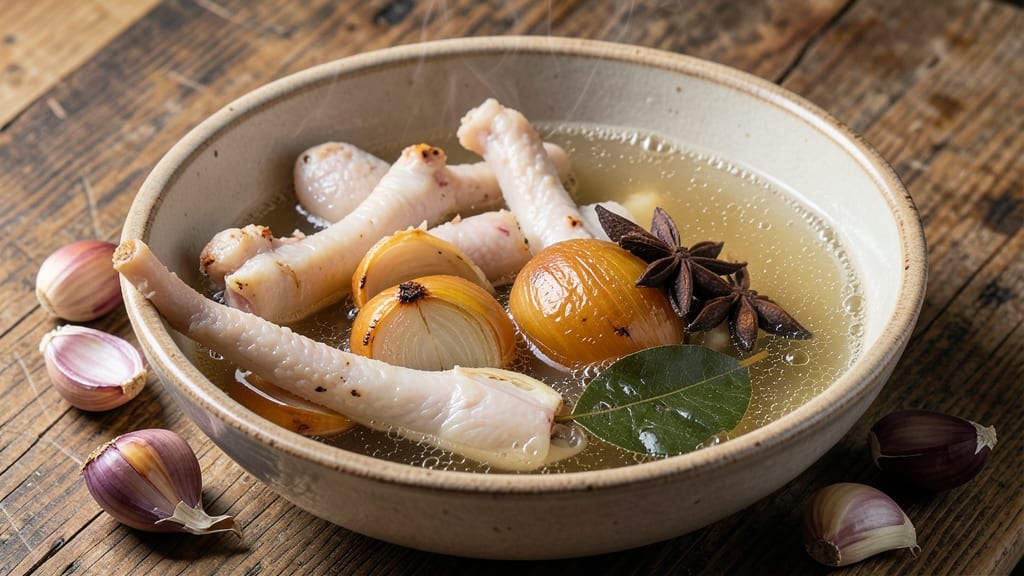
This chicken feet stock recipe unlocks the deep umami foundation that elevates Asian soups, stews, and braises to restaurant-quality depth. The process—from thorough cleaning to slow simmering—transforms what might seem unappetizing into a flavor powerhouse that builds complexity layer by layer.
I developed this method after years of working with traditional Chinese and Thai techniques, where stock quality makes or breaks a dish.
The key lies in patience and preparation: blanching the feet removes impurities while preserving collagen, and long simmering (8–12 hours) extracts gelatinous richness that thickens naturally. Aromatics like ginger, star anise, and bay leaves infuse subtle warmth, while a final reduction concentrates flavor into a glossy, golden liquid.
This isn’t just stock—it’s the secret weapon behind silky soups and tender braised meats.
What you’ll end up with is a deep, collagen-rich stock that transforms ordinary dishes into extraordinary ones—think velvety pho broth, rich braising liquids, or even glaze for stir-fries.
The umami intensity develops over time, rewarding careful technique with a base that’s worth the effort. Perfect for home cooks who want restaurant-quality depth without shortcuts.
Use it as the foundation for any dish where umami is essential—whether you’re making a hearty tonkotsu-style ramen or a Thai coconut curry. The stock keeps for weeks in the fridge, making it a versatile pantry staple. Let’s get started on building flavor from the ground up.
Ingredients for chicken feet stock
Transform ordinary ingredients into a restaurant-quality umami foundation with these essential components.
| Ingredient | Amount | Notes |
|---|---|---|
| Chicken Feet 🦶 | 2 ½ lb | Fresh, skin-on for collagen |
| Yellow Onion 🧅 | 1 whole | Peeled, halved for aromatics |
| Fresh Ginger 🌿 | 2 oz | Unpeeled, sliced into coins |
| Garlic Cloves 🧄 | 6 cloves | Peeled, smashed for infusion |
| Star Anise Pods 🌟 | 4 whole | Whole pods for deep aroma |
| Bay Leaves 🍃 | 2 whole | Dried, standard quality |
| Black Peppercorns 🌶️ | 1 tbsp | Whole, cracked for release |
| Coriander Seeds 🌿 | 1 tbsp | Toasted lightly for warmth |
| Salt 🧂 | 1 ½ tsp | Diamond Crystal kosher |
| Cold Water 💧 | 8 cups | Filtered preferred for clarity |
| Apple Cider Vinegar 🍏 | 1 tbsp | For initial cleaning |
The chicken feet are the cornerstone—look for plump, fresh cuts with minimal odor, ideally from a specialty butcher or Asian market. Costco or Whole Foods often carry them pre-cleaned, but if sourcing raw, soak in vinegar water for 30 minutes to remove impurities. Ginger should be firm and vibrant; organic ginger from the produce section at Trader Joe's consistently delivers the best flavor. Star anise and coriander seeds can be found in the spice aisle—Penzeys Spices offers high-quality whole spices if you're willing to invest. The water quality matters: if your tap water has a strong chlorine taste, use filtered or bottled water for a cleaner final product. For the aromatics, don't skimp on the garlic—elephant garlic adds an extra layer of sweetness if available.
No star anise? Cinnamon sticks or allspice berries work as substitutes, though they'll alter the flavor profile slightly. Running short on coriander seeds? Cumin seeds at half the amount provide warmth but lack the citrusy note. The vinegar is critical for the initial cleaning—white vinegar or lemon juice works in a pinch, but apple cider vinegar adds subtle complexity. For the water, if you're making a larger batch, bone broth or kombu seaweed can be added to deepen umami further. The bay leaves should be fresh if possible; dried leaves from a reputable brand like McCormick are fine for occasional use but won't match the quality of fresh. When measuring the chicken feet, 2.5 pounds yields about 6 cups of stock—scale accordingly if making larger quantities.
This stock develops flavor over time, so reheat gently on low heat—never boil after initial simmering to preserve clarity. Store in glass jars or airtight containers in the refrigerator for up to 2 weeks, or freeze in ice cube trays for up to 6 months. The gelatinous richness thickens as it cools, so reheat slowly to avoid separation. For best results, use within 48 hours of making for peak umami intensity. The stock reduces as it sits, so stir before using—this concentrated liquid is worth the effort, transforming simple dishes into restaurant-quality creations. Portion into smaller containers for easy use in recipes.
Why You'll Love This Recipe
- No Chopping Chaos: I swear by this recipe because the onion and ginger just need rough chopping—no fancy dicing. The chicken feet and star anise do all the heavy lifting while you sip tea and pretend you’re not cooking.
- Umami Bomb: That first sip? Rich, deep, and layered—the garlic and ginger sing, but the chicken feet? They turn it into something almost luxurious, like a secret broth your grandma swore by (but you’ll never tell her you figured it out).
- Stockpile Savior: Freeze it in ice cube trays for later—soup nights, stir-fries, or even instant ramen upgrades. Honestly, I keep a batch in the freezer just for emergencies (read: lazy Mondays when I can’t be bothered with fresh stock).
- Budget Magic: A pound of chicken feet costs less than half a chicken carcass, and this recipe stretches it into gallons. Between us? I’ve made this so often my local Asian market greets me by name—turns out, everyone’s doing it.
Step-by-step instructions for chicken feet stock
Transform humble ingredients into a deeply flavorful foundation for your next umami-rich dish.
Prepare and Blanch the Chicken Feet
Begin by rinsing the 2.5 lb chicken feet under cold water to remove any debris, then pat them thoroughly dry with paper towels. This ensures a clean surface for maximum flavor extraction. In a large stockpot, combine the chicken feet with the 8 cups cold water and bring to a rolling boil over high heat.
Once boiling vigorously, reduce heat to medium-high and maintain a steady simmer for 15 minutes. This initial blanching step helps remove impurities and surface proteins that could cloud your stock. Skim off any foam or scum that rises to the surface during this time using a fine-mesh skimmer or ladle. The water should remain clear and the stockpot should never run dry—add more cold water if needed to maintain the liquid level.
Add Aromatics and Vinegar for Initial Infusion
After blanching, remove the chicken feet from the pot and set them aside. In the same pot, add the 1 whole yellow onion (halved), 2 oz fresh ginger (sliced into coins), 6 cloves garlic (peeled and smashed), 1 tbsp apple cider vinegar, and 1.5 tsp salt. The vinegar helps break down proteins and extract collagen from the chicken feet, while the aromatics build depth of flavor.
Return the chicken feet to the pot and bring everything back to a boil over high heat. Once boiling, reduce heat to medium-low and let the mixture simmer gently for 30 minutes. This stage allows the vinegar to work its magic, drawing out gelatinous compounds that will later thicken your stock. You'll notice the liquid developing a richer color and subtle aroma—this is your stock coming to life.
Incorporate Spices and Long-Simmer for Collagen Extraction
Lightly toast the 1 tbsp coriander seeds in a dry skillet over medium heat for 2-3 minutes until fragrant, then transfer them to a spice grinder or mortar and pestle to crack them. Add these toasted seeds, along with the 1 tbsp black peppercorns (cracked), 4 whole star anise pods, and 2 whole bay leaves to the simmering stockpot. Stir gently to distribute the spices evenly.
Return the pot to a gentle simmer and maintain this temperature for 4-5 hours, uncovered. The key here is patience—long simmering breaks down collagen in the chicken feet, transforming connective tissue into gelatin that will give your stock its signature body. Check the water level periodically and add hot water as needed to keep the chicken feet submerged. You'll know it's working when the stock develops a deep golden hue and an intense umami aroma that fills your kitchen.
Strain and Reduce for Maximum Concentration
Once the stock has simmered for the full 4-5 hours, remove the chicken feet and aromatics using a fine-mesh strainer or cheesecloth-lined colander. Press gently on the solids to extract every last bit of flavor—this is where the magic happens. Discard the solids and return the strained stock to the pot.
Bring the stock to a gentle simmer again and reduce it by one-third over 15-20 minutes, stirring occasionally. This concentration step intensifies the flavor and removes any remaining impurities. The finished stock should measure approximately 4 cups and have a rich, syrupy consistency. For best results, let it cool to room temperature before refrigerating or freezing. The flavor will continue to develop over the next 24 hours, making it even more complex and delicious.
Pro Tips For Making Chicken Feet Stock
- Blister the Feet First: Before adding anything else, sear the chicken feet in a dry pot over medium-high heat until the skin blackens and cracks—this unlocks deeper flavor. I used to skip this, and the stock always tasted bland; now it’s rich and complex from the Maillard reaction.
- Peel Ginger Like a Pro: Use a spoon to scoop off the skin in one smooth motion, then slice into thin coins—no peeling knife required. Thick chunks take forever to soften, and you’ll end up with a bitter aftertaste if you overcook them.
- Smash the Garlic: Crush the cloves with the flat side of your knife before adding them to the pot—this releases more aroma and infuses the stock faster. Whole cloves just sit there like decorative placeholders.
- Simmer Low and Long: Once the stock starts bubbling, drop the heat to the lowest setting where it barely moves—even a gentle boil breaks down collagen faster. I learned this after a 12-hour simmer turned into a 6-hour one with the same (better) results.
Serving suggestions for this dish
Soup Elevation
Use this stock as the base for pho, hot and sour soup, or tonkotsu-style ramen—it adds a deep, gelatinous richness that transforms simple broths into restaurant-quality masterpieces.
For pho, reduce the stock by half and add star anise, cinnamon, and a splash of fish sauce before serving with thin rice noodles and fresh herbs. The collagen-rich texture coats your mouth with every sip, creating an unmatched dining experience. 🌟
Braising Liquid
Braise chicken thighs, pork belly, or tofu in this stock for tender, fall-off-the-bone results. Simmer the protein with the stock, ginger, and garlic for 2-3 hours until fork-tender.
The stock’s umami infuses the meat, creating a self-basting sauce that reduces into a glossy glaze. I love using it for Thai-style braised pork or Japanese-style chicken katsu.
Sauce Thickener
Reduce the stock by two-thirds to create a glossy, umami-packed sauce for stir-fries or noodle dishes. Add soy sauce, rice vinegar, and a touch of sugar to balance the intensity.
Drizzle over steamed rice with quick-pickled vegetables for a one-bowl meal that’s packed with depth. The gelatinous texture clings beautifully to grains and proteins. ✨
Marinade Base
Mix equal parts stock and soy sauce with grated ginger and garlic to create a flavorful marinade for grilled meats or tofu. Let it penetrate for at least 4 hours (overnight for best results) before cooking.
The umami from the stock ensures juicy, deeply flavored proteins every time. I use this for char siu-style pork or teriyaki-glazed salmon.
Rice Cooker Hack
Add 1 cup of stock to your white rice while cooking for an infused, umami-rich side dish. The stock imparts subtle depth without overpowering the rice. For extra flavor, stir in a pinch of salt and a splash of sesame oil at the end.
This trick is a game-changer for rice bowls or banh mi sandwiches. 💡
Garnish & Finish
Strain the stock through a fine-mesh sieve to remove any remaining particles, then reserve a small amount to deglaze the pot after searing proteins. The residual flavors create a rich pan sauce that’s perfect for drizzling over grilled meats or stir-fries.
For a luxurious touch, finish with toasted sesame seeds or fresh cilantro.
Nutrition facts
Frequently asked questions
Why do chicken feet need blanching before making stock?
Blanching removes surface impurities, blood, and proteins that would otherwise cloud your stock. The 15-minute boil also helps tenderize the connective tissue, making collagen extraction more efficient during the long simmer. Skipping this step can result in a murky, less flavorful broth.
Can I substitute chicken feet with other parts like chicken necks or wings?
While chicken necks or wings work, they lack the collagen-rich gelatin that gives this stock its signature body. For a similar texture, combine 1 lb chicken feet with 1 lb chicken bones. The feet provide the gelatinous richness, while other parts add depth. Never use feet alone for lighter stocks like consommé.
How do I know when the stock is ready?
Your stock is done when it develops a deep amber color and intense umami aroma after 4-5 hours of simmering. The liquid should coat the back of a spoon with a slight gel-like consistency when chilled. If it smells faintly sweet with a meaty depth, it's ready for reduction.
What's the best way to store and reheat this stock?
Store in glass jars or airtight containers in the fridge for 2 weeks or freeze in ice cube trays for 6 months. To reheat, warm on low heat (never boil) until just hot. The gelatin may thicken—stir gently to restore consistency. For best flavor, use within 48 hours of making.
Can I make this stock in an Instant Pot?
Yes, but with adjustments: Use high pressure for 90 minutes instead of simmering. After cooking, strain and reduce on the stove. The Instant Pot speeds up collagen extraction but may yield slightly less gelatin. For maximum body, combine with traditional stovetop methods for 2 hours after pressure cooking.