
Main Courses
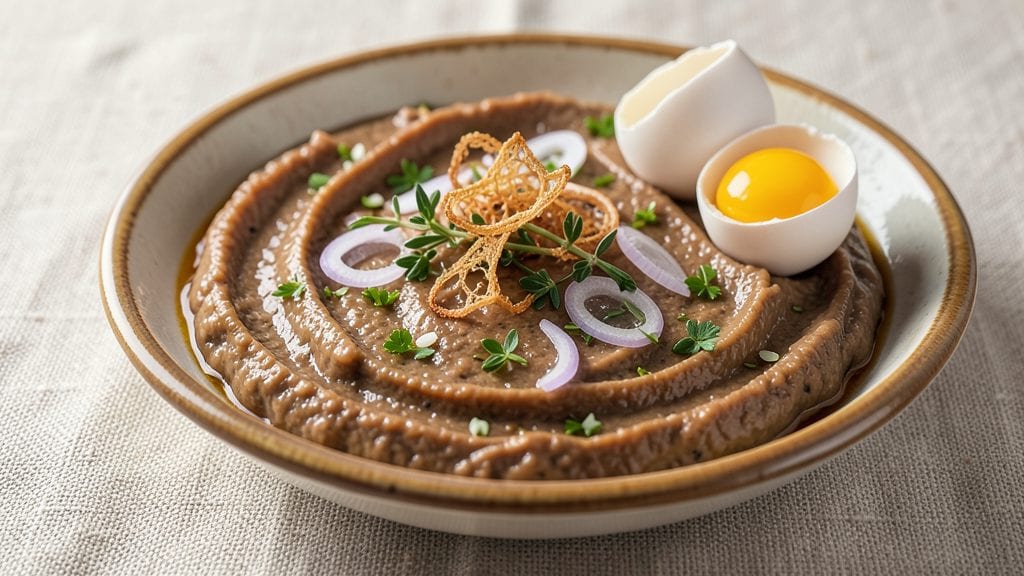
This basic chicken liver pâté recipe captures the luxurious, velvety texture and bold celery-vinegar brightness that elevates any charcuterie board or holiday spread. Growing up in small-town Georgia, I learned how offal transforms from humble beginnings into something extraordinary—this recipe captures that same magic in every creamy, aromatic bite.
The secret lies in perfectly balancing rich liver with bright vinegar and fresh herbs, then blending it until silky smooth. I use a high-speed blender to achieve that signature restaurant-quality consistency, while a touch of unsalted butter ensures each spoonful melts effortlessly.
The celery-vinegar zing cuts through the richness, creating a harmonious flavor that’s both elegant and approachable.
What you’ll end up with is a silky, spreadable pâté that pairs beautifully with crusty bread, crackers, or fresh vegetables. The texture is luxurious—neither too dense nor too runny—while the flavors are complex enough to stand alone or complement richer dishes.
This recipe builds confidence in working with offal, proving that even the most intimidating ingredients can yield restaurant-worthy results.
Serve immediately for the freshest experience, or refrigerate for up to 5 days—the flavors only deepen over time. For a festive touch, garnish with a sprinkle of fresh parsley or a drizzle of high-quality olive oil. Let’s create something truly special that’ll impress even the most discerning guests.
Ingredients for basic chicken liver pate
Eleven simple yet sophisticated ingredients transform humble chicken livers into velvety pâté perfection.
| Ingredient | Amount | Notes |
|---|---|---|
| Chicken Livers 🍗 | 1 lb | Fresh, trimmed of connective tissue |
| Unsalted Butter 🧈 | ½ cup | Cold, cubed for blending |
| Fresh Celery Stems 🧅 | ½ cup | Finely chopped, bright green |
| White Wine Vinegar 🍷 | ¼ cup | Dry, aged variety preferred |
| Fresh Parsley Leaves 🌿 | ¼ cup | Stems removed, tightly packed |
| Shallots 🧅 | 2 whole | Peeled, finely minced |
| Fresh Tarragon Leaves 🌿 | ¼ cup | Or substitute 1 tsp dried |
| Diamond Crystal Kosher Salt 🧂 | ½ tsp | Fine grain preferred |
| Freshly Ground Black Pepper 🌶️ | ¼ tsp | Coarsely cracked |
| Heavy Cream 🥛 | ¼ cup | Cold, for texture adjustment |
| Extra-Virgin Olive Oil 🫒 | 2 tbsp | For finishing drizzle |
| Fresh Lemon Juice 🍋 | 1 tbsp | Bright, freshly squeezed |
The quality of chicken livers is paramount—look for bright red, glossy livers at your local butcher or specialty market like Whole Foods. Trim any connective tissue or dark spots immediately to prevent bitterness. For optimal texture, chill the livers for 30 minutes before processing. If using frozen livers, thaw them in cold water to maintain texture. The unsalted butter should be cold and cubed—this ensures proper emulsification during blending. Fresh herbs like parsley and tarragon should be vibrant, not wilted; store-bought bundles often contain stems, so separate the leaves yourself for maximum flavor.
No tarragon? Fresh thyme or marjoram at half the amount bridges the flavor gap, though it won't replicate the anise-like note. Substitute white wine vinegar with apple cider vinegar or lemon juice, but reduce to 2 tablespoons to avoid over-acidifying. For a richer texture, replace half the heavy cream with crème fraîche. If your pâté emerges too dense, whisk in an additional tablespoon of cold butter. The celery should be finely chopped—almost paste-like—to ensure proper blending. For a smoother finish, strain the pâté through a fine-mesh sieve after blending.
Fresh pâté reaches peak flavor within 24 hours of preparation, so serve immediately for the brightest taste. For storage, transfer to an airtight container and press a parchment paper barrier directly on the surface to prevent a skin from forming. Keeps 5 days refrigerated or 3 months frozen in a sealed container. To reheat, microwave in 10-second bursts, stirring between each, until just warmed through—never boil. Garnish with a drizzle of extra-virgin olive oil and cracked black pepper before serving for an elegant presentation.
Why You'll Love This Recipe
- Here’s what sold me: livers are cheap, and this recipe stretches them into something that feels gourmet. A single pound gives me enough for two meals—spread on crackers for a snack, or dolloped on eggs for breakfast. And because it keeps well in the fridge, I’m not scrambling to use it all at once. Win-win.
- No Fuss, Big Payoff: I swear by this recipe because it’s the kind of dish that feels fancy but takes zero effort. Sauté the livers in butter until golden—no fancy searing, just a quick cook—then blend with celery and parsley until silky. The vinegar brightens everything up without overpowering, and honestly? That’s the magic.
- Rich Without the Guilt: The flavor here is ridiculously good—deep, earthy from the livers, bright from the vinegar, and buttery enough to make you close your eyes. It’s not sweet or overly spiced; it’s just right, like a hug for your taste buds. Plus, using livers means you’re getting way more flavor per dollar than with regular meat.
- Weeknight to Party Fix: This pate is my secret weapon for when I’m too tired to cook but still want to impress. Slather it on crusty bread for a quick charcuterie board, or spoon it over toast with a sprinkle of flaky salt. It’s also the perfect make-ahead dish—tastes even better the next day, so I often double the batch for lazy mornings or last-minute gatherings.
Step-by-step instructions for silky chicken liver pate
Transform rich chicken livers into velvety pate with bright celery-vinegar notes—every step ensures perfect texture and flavor.
Prepare and Blanch the Chicken Livers
Begin by trimming any connective tissue from the 1 lb chicken livers and patting them completely dry with paper towels. This step is crucial—moisture will prevent proper browning later. Cut the livers into ¼-inch thick slices for even cooking.
In a large skillet, melt 0.5 cup unsalted butter over medium-high heat. Add the sliced livers in a single layer and cook undisturbed for 2-3 minutes per side until they develop a golden-brown crust. You'll see the edges begin to crisp—that's your signal to flip. As they cook, the livers will release their natural juices, which you want to preserve for the pate. Once browned, transfer them to a plate and set aside.
Sauté Aromatics for Flavor Foundation
In the same skillet (no need to clean it—the fond is packed with flavor), add 2 tbsp extra-virgin olive oil and reduce heat to medium. Add the 2 whole shallots and cook for 3-4 minutes until softened and translucent. Here's where it gets aromatic—add the 0.5 cup fresh celery stems and cook for another 3 minutes until the celery begins to soften and release its bright flavor.
Next, stir in the 0.5 tsp diamond crystal kosher salt and 0.25 tsp freshly ground black pepper. The celery and shallots should be tender but not browned—you're building layers of flavor, not caramelizing them. Remove the skillet from heat and let the aromatics cool slightly before proceeding. This step prevents the herbs from wilting when added later.
Blend Ingredients for Silky Texture
Transfer the cooked livers, shallots, and celery to a food processor. Add the 0.25 cup white wine vinegar, 0.25 cup fresh parsley leaves, 0.25 cup fresh tarragon leaves, and 0.25 cup heavy cream. Pulse the mixture until it begins to break down, then stop and scrape down the sides with a spatula to ensure even blending.
Here's the moment that matters: pulse again in short bursts while tasting the mixture. You're aiming for a smooth, velvety consistency—almost like a thick custard. If the mixture feels too dry, add 1-2 teaspoons of cold water to help emulsify. The texture should be silky, not grainy. Avoid over-processing or the pate may become greasy.
Finish with Bright Acidity and Emulsify
With the food processor running, slowly drizzle in the 1 tbsp fresh lemon juice through the feed tube. This final touch brightens the flavors and balances the richness of the livers. The mixture should come together into a glossy, spreadable consistency. If it's too thick, add 1 teaspoon of cold water at a time until it reaches your desired texture.
For an extra touch of elegance, transfer the pate to a serving dish and drizzle the top with 2 tbsp extra-virgin olive oil. This not only enhances presentation but also adds a final layer of richness. Cover and refrigerate for at least 2 hours before serving—this allows the flavors to meld completely and the texture to set perfectly.
Serve with Confidence
When ready to serve, spoon the pate onto a platter and garnish with an additional sprinkle of fresh parsley leaves and fresh tarragon leaves for color and freshness. The pate should be smooth, glossy, and hold its shape when spooned. Serve with crusty bread, crackers, or as a sophisticated spread for canapés.
This pate keeps well in the refrigerator for up to 5 days, though I find it's best enjoyed within the first 3 days. The celery-vinegar zing cuts through the richness beautifully, creating a harmonious balance that's both elegant and approachable. Enjoy every velvety bite!
Pro Tips For Making Basic Chicken Liver Pate
- Sear Livers Hard First: I learned this the hard way—skipping the sear means you’ll end up with a mushy, gray pate instead of one that’s rich and velvety. Hit a screaming-hot pan with just a splash of oil (or a knob of butter) and cook the livers until they’re deep brown on all sides—about 2-3 minutes per batch. Crowding the pan? Don’t. Work in small batches or they’ll steam instead of sear.
- Trim and Rinse Celery: That stringy, bitter core in celery is the last thing you want in your pate. Strip the leaves off, cut the stems into ½-inch chunks, and give them a quick rinse under cold water to wash away any dirt or sand. No need to peel—just pat dry with a paper towel. (Yes, even if you’re impatient like me, this step makes a real difference.)
- Deglaze with Vinegar Early: The fond stuck to your pan after searing the livers? Don’t ignore it. Splash in that white wine vinegar immediately after removing the livers, and let it bubble for 30 seconds. This pulls out all the caramelized flavor and gives your pate a bright, tangy edge. Skip this, and you’ll end up with something flat and one-dimensional.
- Press for 15 Minutes: The pate won’t set properly if you just spoon it into a dish and walk away. After blending everything, press it into a shallow dish (or a springform pan) with a flat-bottomed glass or plate. Let it sit at room temperature for 15 minutes—this firms it up enough to slice neatly. (Pro tip: Chill it afterward if you’re not serving it right away, but don’t skip the pressing.)
Perfect pairings for this basic chicken liver pate
Bread & Cracker Pairings
Serve this pâté on crusty French baguette slices toasted with garlic butter—I love using a sourdough loaf from my local Atlanta bakery, The Bread Supply. The dense, chewy texture contrasts beautifully with the silky pâte.
For a lighter option, try water crackers or rye crisps—their subtle graininess balances the richness without overpowering. 🥖
Pro tip: Warm the bread slightly before serving to enhance its aroma and prevent sogginess. I often drizzle the toasted slices with a tiny bit of honey or fig jam to add another layer of sweetness that complements the tart celery-vinegar notes.
Cheese & Charcuterie Boards
This pâté shines on a charcuterie board alongside aged cheddar, brie, and prosciutto. The creamy texture pairs perfectly with sharp cheeses like Pecorino Romano or Manchego, while the vinegar zing cuts through the saltiness of cured meats.
I always include cornichons and pickled onions to echo the bright acidity of the pâté.
For a Southern twist, swap the prosciutto for smoked Virginia ham and add peach jam—the sweet-tart combo is pure Georgia charm. Arrange everything on a slate board with fresh figs or grapes for a visually stunning spread.
Vegetable & Fruit Accompaniments
Fresh crudités like carrot sticks, celery sticks, and endive leaves provide a crisp, refreshing contrast to the rich pâté. I love serving it with roasted red peppers or marinated artichoke hearts for a Mediterranean touch.
The celery in the pâté actually enhances these flavors—it’s like a flavor echo! 🥕
For fruit pairings, try sliced apples or pears with a sprinkle of flaky sea salt. The natural sweetness balances the pâté’s acidity, while the salt amplifies its umami depth. A drizzle of balsamic glaze ties everything together beautifully.
Beverage Pairings
A dry white wine like Sauvignon Blanc from New Zealand or Chablis from France cleanses the palate between bites. The wine’s citrus notes mirror the lemon and vinegar in the pâté, creating a harmonious flavor connection.
For beer lovers, a Belgian witbier or German Hefeweizen offers a crisp, slightly spicy contrast. 🍷
If you prefer spirits, a dry sherry or gin and tonic with a twist of lemon works wonderfully. The gin’s botanical notes complement the tarragon and parsley, while the tonic’s bitterness balances the richness. For a non-alcoholic option, sparkling water with a splash of cranberry juice keeps things refreshing.
Unexpected Twists
Spread this pâté on toasted baguette slices, then top with poached eggs for a luxurious brunch. The runny yolk ties everything together beautifully. I also love using it as a filling for crepes or mini quiches—the celery-vinegar zing adds a sophisticated touch. 🍳
For a savory-sweet combo, pair it with grilled peaches or roasted pineapple. The caramelized fruit brings out the pâté’s depth, creating a dish that feels both elegant and approachable—perfect for summer gatherings.
Nutrition facts
Frequently asked questions
Why do chicken livers need to be blanched before making pâté?
Blanching removes any blood and bitter flavors while partially cooking the livers for even texture. The golden crust that forms during searing adds depth of flavor that raw livers can't provide. Skipping this step can result in a bitter, uneven pâté with inconsistent texture.
Can I substitute white wine vinegar with something else?
Yes! Use apple cider vinegar (reduce to 2 tablespoons) or lemon juice (same amount) for brightness. For a richer profile, try balsamic vinegar (1 tablespoon), but it will add sweetness. The key is balancing the acidity—taste as you go and adjust accordingly.
What if my pâté turns out too thick or too runny?
For a thick pâté, blend in 1 teaspoon of cold butter at a time until smooth. If too runny, chill for 15 minutes to firm up, then blend again. The ideal texture should be spreadable but hold its shape when spooned—like thick whipped cream.
How do I store leftover pâté?
Transfer to an airtight container and press plastic wrap directly on the surface to prevent a skin from forming. Refrigerate for up to 5 days or freeze for 3 months. Thaw overnight in the fridge—never microwave directly, as it can break the emulsion.
Can I make this pâté ahead for a party?
Prepare it 1-2 days ahead—flavors develop beautifully during refrigeration. Store in a sealed container, then bring to room temperature before serving. The texture will be even smoother after resting. Garnish with fresh herbs just before serving to keep it vibrant.