
Main Courses
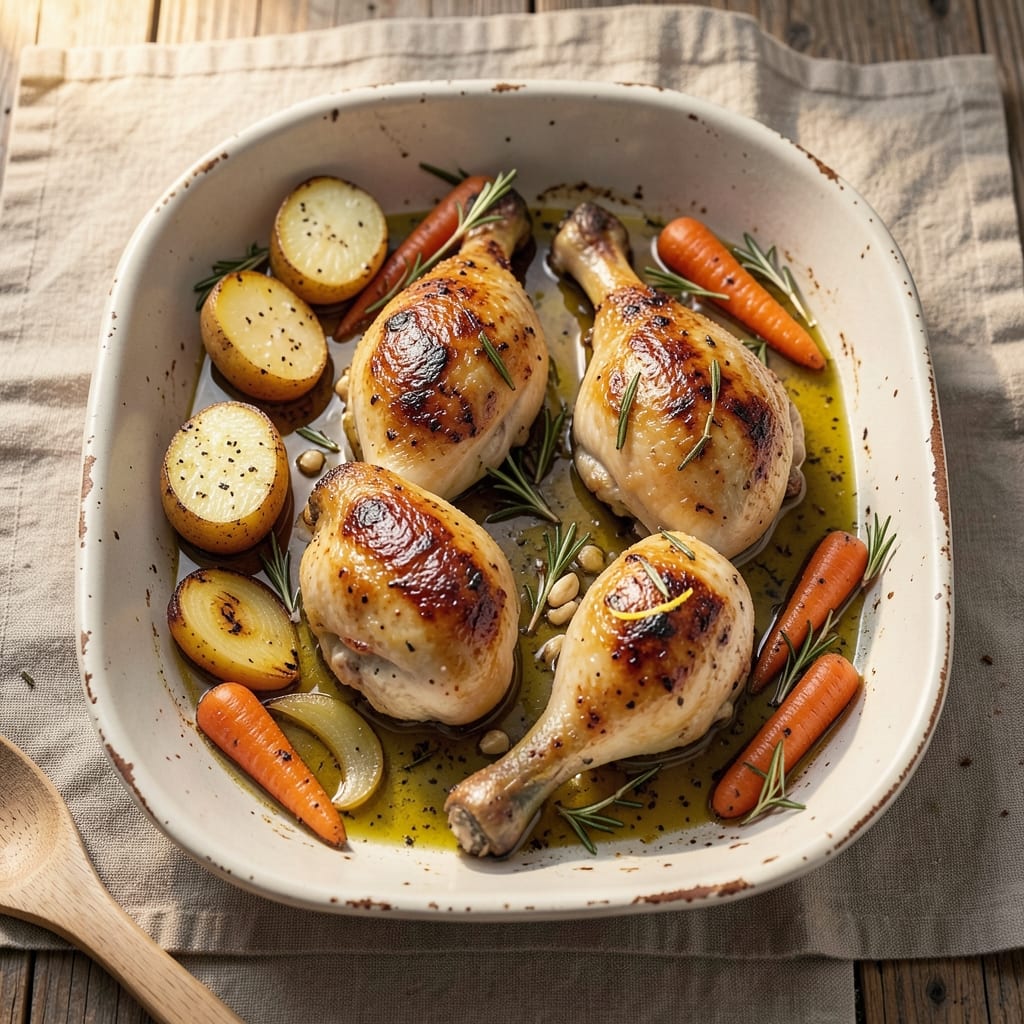
This baked chicken legs with vegetables recipe delivers restaurant-quality results with minimal effort—juicy, golden skin and tender meat that falls off the bone. The secret lies in a high-heat roast that renders fat slowly while vegetables caramelize into sweet, crisp edges. I perfected this one-pan method during a busy week when I needed a meal that tasted like Sunday dinner without the hours in the kitchen.
The beauty of this dish is its versatility—swap potatoes for sweet potatoes, add bell peppers for color, or toss in Brussels sprouts for extra depth. A simple marinade of olive oil, garlic, and smoked paprika ensures bold flavor without overpowering the natural taste of the chicken. The vegetables roast alongside the chicken, absorbing those rich juices as they cook, creating a harmonious balance of textures and flavors.
What you’ll end up with is crispy, golden-brown skin that shatters at the touch and meat so tender it pulls apart effortlessly. The vegetables emerge caramelized and slightly charred at the edges, their natural sweetness enhanced by the chicken’s savory juices. This is the kind of meal that transforms a weeknight into a special occasion—without requiring a single extra dish to wash.
Serve with a sprinkle of fresh herbs and a squeeze of lemon for brightness, or drizzle with a homemade pan sauce made from the rendered chicken fat. The leftovers reheat beautifully, making this an ideal recipe for meal prep or feeding a crowd. Let’s get started on this foolproof, one-pan masterpiece.
Ingredients for baked chicken legs with vegetables
Nine essential ingredients transform simple chicken legs into crispy, juicy perfection with caramelized vegetables.
| Ingredient | Amount | Notes |
|---|---|---|
| Chicken Legs (Thigh-Drumstick) 🍗 | 4 whole | Skin-on for crispy texture |
| Baby Potatoes 🥔 | 1 ½ lb | Halved for even cooking |
| Carrots 🥕 | 1 lb | Cut into 1-inch chunks |
| Yellow Onion 🧅 | 1 whole | Quartered, skin on |
| Garlic Cloves 🧄 | 4 cloves | Minced for marinade |
| Extra-Virgin Olive Oil 🫒 | ½ cup | For high-heat roasting |
| Smoked Paprika 🌶️ | 1 tbsp | For deep flavor |
| Ground Black Pepper 🌶️ | 1 tsp | Freshly cracked |
| Kosher Salt 🧂 | 1 ½ tsp | Diamond Crystal preferred |
| Fresh Rosemary 🌿 | ¼ cup | Chopped, stems removed |
| Fresh Thyme 🌿 | ¼ cup | Leaves only, stems removed |
| Lemon Juice 🍋 | 1 tbsp | Freshly squeezed |
The chicken legs are the star, so choose thigh-drumstick pairs—the thigh stays juicy while the drumstick crisps beautifully. Look for plump, firm legs with minimal bruising at your local butcher or grocery store's meat counter. Whole Foods and Trader Joe's often carry high-quality, organic options that make a noticeable difference in flavor. Pat them dry before seasoning—this ensures crispier skin. The vegetables should be fresh but firm, with no soft spots. Carrots with vibrant orange color and potatoes that feel heavy for their size are ideal. For the herbs, fresh is best (the farmers market has the brightest rosemary), but dried thyme works in a pinch at one-third the amount.
No smoked paprika? Regular paprika plus a pinch of cayenne mimics the smoky depth. Fresh herbs wilted or unavailable? Dried oregano at half the amount adds earthy notes without overpowering. Swap potatoes for sweet potatoes or fingerlings—just adjust cooking time slightly. The lemon juice can be omitted if you prefer, but it brightens the dish beautifully. For a deeper flavor, marinate the chicken for 30 minutes before roasting. The olive oil should be extra-virgin—it makes a difference in high-heat cooking. If you're short on time, toss the vegetables with a little more oil to prevent drying out.
This dish reheats beautifully—350°F for 10-15 minutes restores that crispy skin. Store leftovers in an airtight container for up to 4 days in the fridge. For meal prep, portion the chicken and vegetables separately to maintain texture. The rendered chicken fat in the pan can be saved for future recipes—just strain it through a fine-mesh sieve. Freeze any extras for up to 3 months. The vegetables stay crispest when reheated separately, so save them for salads or sides. This recipe scales perfectly for crowds—just double the ingredients and use a larger roasting pan.
Why You'll Love This Recipe
- One-Pan Magic: I swear by this recipe because it’s literally one pan, one oven, and zero stress. Toss the chicken, potatoes, carrots, and onions on a sheet—no fancy layers or last-minute chopping—just 40 minutes later, you’ve got dinner. My kids even help "arrange" the veggies (mostly to make it messy), and I still end up with a meal that looks like I tried.
- Garlic-Crusted Crunch: That crispy skin on the chicken legs? Chef’s kiss. The secret’s in the garlic and onion—roasted until caramelized but not burnt—so every bite has this sweet, savory punch. Honestly, the potatoes get the best deal here: buttery outside, fluffy inside, and somehow they soak up all the flavor like sponges.
- Weeknight & Potluck Star: Between us, this is my go-to for anything: lazy Tuesday dinners, Sunday leftovers (yes, they’re even better reheated), or that one potluck where you’re the hero. Bring it to a BBQ, and no one will guess it’s just baked—everyone’ll think you slaved over it. (Spoiler: you didn’t.)
- Budget Feast, Zero Waste: Chicken legs are the smart choice—cheaper than breasts, juicier, and you get twice the meat. Pair that with humble potatoes and carrots, and suddenly you’ve fed four for the price of two. Leftovers? Reheat them with a splash of broth, and they taste like you made them fresh. My wallet and my family thank me every time.
Step-by-step instructions for baked chicken legs with vegetables
Here's how to achieve perfectly crisp skin and tender meat with vibrant vegetables in one pan.
Prep the Chicken and Vegetables for Even Cooking
Pat the 4 whole chicken legs dry with paper towels—this is crucial for crispy skin. Place them skin-side up on a cutting board. If needed, trim any excess fat from the thighs, but leave a thin layer to protect the meat during roasting.
Halve the 1.5 lb baby potatoes lengthwise, leaving the skins intact for texture. Cut the 1 lb carrots into 1-inch chunks, and quarter the 1 whole yellow onion, leaving the skin on for added flavor. Chop the 0.25 cup fresh rosemary and 0.25 cup fresh thyme, removing stems for maximum aroma. Mince the 4 garlic cloves and squeeze 1 tbsp lemon juice into a small bowl—we'll use this later for brightness.
Create the Herb Oil Marinade
In a large bowl, combine the 0.5 cup extra-virgin olive oil, 1 tbsp smoked paprika, 1.5 tsp kosher salt, 1 tsp ground black pepper, minced garlic, chopped rosemary, thyme, and lemon juice. Whisk vigorously until the spices are fully dissolved and the oil takes on a vibrant color. This marinade will infuse the chicken and vegetables with deep, aromatic flavors.
Add the prepared chicken legs, potatoes, carrots, and onion to the bowl and toss gently to coat evenly. Let the mixture sit at room temperature for 15 minutes—this allows the flavors to meld and ensures the chicken cooks evenly from the start.
Arrange for Optimal Roasting
Preheat your oven to 425°F. Line a large rimmed baking sheet with aluminum foil for easy cleanup. Arrange the marinated chicken legs skin-side up in the center of the pan, leaving space around them. Scatter the potatoes, carrots, and onion around the chicken, creating a single layer without overcrowding. This arrangement allows hot air to circulate freely, promoting even browning.
Drizzle any remaining marinade from the bowl over the vegetables. If the pan looks dry, add 1-2 tablespoons of water to create steam that will help tenderize the vegetables. Roast for 20 minutes at 425°F to develop a golden crust on the chicken skin and begin softening the vegetables.
Finish with Low-and-Slow Roasting
After the initial 20 minutes, reduce the oven temperature to 375°F. This lower temperature ensures the chicken cooks through without drying out while allowing the vegetables to tenderize evenly. Continue roasting for 45-55 minutes, or until the chicken reaches an internal temperature of 165°F when measured at the thickest part of the thigh.
You'll know the chicken is done when the skin is deep golden brown and crispy, and the juices run clear when pierced with a meat thermometer. The potatoes should be fork-tender with slightly crisp edges, and the carrots should be soft enough to pierce easily with a fork. The onions should be caramelized with tender flesh.
Rest and Serve for Maximum Juiciness
Transfer the chicken legs to a cutting board and tent loosely with aluminum foil. Let them rest for 10 minutes before serving—this crucial step allows the juices to redistribute throughout the meat, preventing them from running out when you cut into the chicken. During this time, toss the vegetables gently in their pan juices to coat them evenly.
Serve the chicken legs with the roasted vegetables directly from the pan. The combination of crispy skin, tender meat, and caramelized vegetables creates a harmonious balance of textures and flavors. Each bite delivers juicy, flavorful chicken with perfectly roasted vegetables that complement rather than compete with the main dish.
Pro Tips For Making Baked Chicken Legs With Vegetables
- STEAM THE POTATOES FIRST: I learned this the hard way—tossing raw baby potatoes into the oven with everything else means they’ll steam instead of crisp up. Parboil them for 8–10 minutes first, then drain and rough up their skins with your hands. They’ll brown beautifully and stay fluffy inside.
- SLICE ONIONS THICK: Thinly sliced onions turn mushy in the oven. Cut them into ½-inch chunks so they caramelize instead of turning to mush. If you’re impatient, toss them in a little olive oil before adding to the tray—just don’t overcrowd.
- DON’T OVERCROWD THE PAN: I used to jam everything in one sheet pan, thinking more space would help. Wrong. Chicken legs need room to breathe, or they’ll steam instead of brown. Use two pans if needed, and spread the veggies in a single layer—no overlapping.
- SEAR CHICKEN AFTER PREHEATING: Skip the raw chicken straight into the oven, and you’ll end up with pale, bland meat. After preheating, sear the legs skin-side down in a cold pan for 3–4 minutes until golden. The extra effort guarantees crispy skin and juicier meat.
Troubleshooting perfect results
Skin Not Crispy?
If your chicken skin isn't crispy, you might be dealing with moisture issues. Pat the legs extra dry before seasoning—even a damp towel can prevent crispiness. For an extra boost, broil for 3-5 minutes at the end of cooking. I also recommend using a wire rack over a baking sheet to allow air circulation on all sides. 🔥
Vegetables Too Dry?
Overcrowding is the usual culprit. Arrange vegetables in a single layer with space between pieces. If they still dry out, add 1-2 tablespoons of water or chicken broth to the pan before roasting. For extra moisture, toss them with 1 extra tablespoon of olive oil before seasoning.
Chicken Overcooked?
Use a meat thermometer to check the internal temperature—165°F at the thickest part of the thigh is perfect. If you're unsure, pull the chicken when it reaches 160°F and let it rest. Overcooking happens when you don't account for carryover cooking—10 minutes of resting time makes a huge difference. 💡
Uneven Cooking?
This usually means your oven isn't preheated properly or the pan isn't positioned correctly. Always preheat for 15 minutes before adding the dish. Place the pan on the middle rack for even heat distribution. If your oven runs hot, reduce the temperature by 25°F to compensate.
Flavor Too Mild?
Boost the marinade by adding ½ teaspoon of cayenne or 1 teaspoon of garlic powder for extra depth. For a smokier flavor, sprinkle ½ teaspoon of smoked salt over the chicken before roasting. I also recommend letting the chicken marinate for 30 minutes instead of just 15 for richer flavor.
Pan Too Messy?
Line your baking sheet with parchment paper for easy cleanup. If you're using foil, crimp the edges tightly to prevent leaks. For extra protection, place a second sheet of foil underneath the parchment. This keeps your oven clean and makes reheating leftovers a breeze. ✨
Nutrition facts
Frequently asked questions
Can I use bone-in chicken thighs instead of drumstick-thigh pairs?
Bone-in thighs cook slightly faster than drumsticks, so reduce the total roasting time by 10-15 minutes. The bones help retain moisture, making them even more forgiving if you accidentally overcook. Just check for 165°F internal temp at the thickest part of the thigh.
What's the best way to reheat leftovers without drying out the chicken?
Warm the chicken in a 350°F oven for 10-15 minutes, covered loosely with foil. For extra moisture, add 1 tablespoon of water or broth to the pan before reheating. The vegetables reheat best separately—toss them with 1 teaspoon of olive oil and warm for 5 minutes in the microwave or oven.
How do I adjust this recipe for a crowd of 6?
Double all ingredients and use a 12x17-inch rimmed baking sheet. Increase roasting time by 10-15 minutes since the pan will hold more food. For even cooking, rotate the pan halfway through. The same method works—just scale up the marinade and vegetables proportionally.
Can I substitute sweet potatoes for regular potatoes?
Yes, but they take slightly longer to cook. Cut sweet potatoes into ½-inch slices (thicker than regular potatoes) and add them to the pan 10 minutes before the chicken is done. Their natural sweetness pairs beautifully with the smoky paprika. For faster cooking, parboil them for 5 minutes before roasting.
What's the secret to extra-crispy chicken skin?
Pat the chicken bone-dry with paper towels, then let it sit uncovered on a wire rack for 15 minutes before roasting. After the initial 20 minutes at 425°F, broil for 3-5 minutes until deeply golden. The key is high heat and minimal moisture—never cover the pan while roasting.