
Main Courses
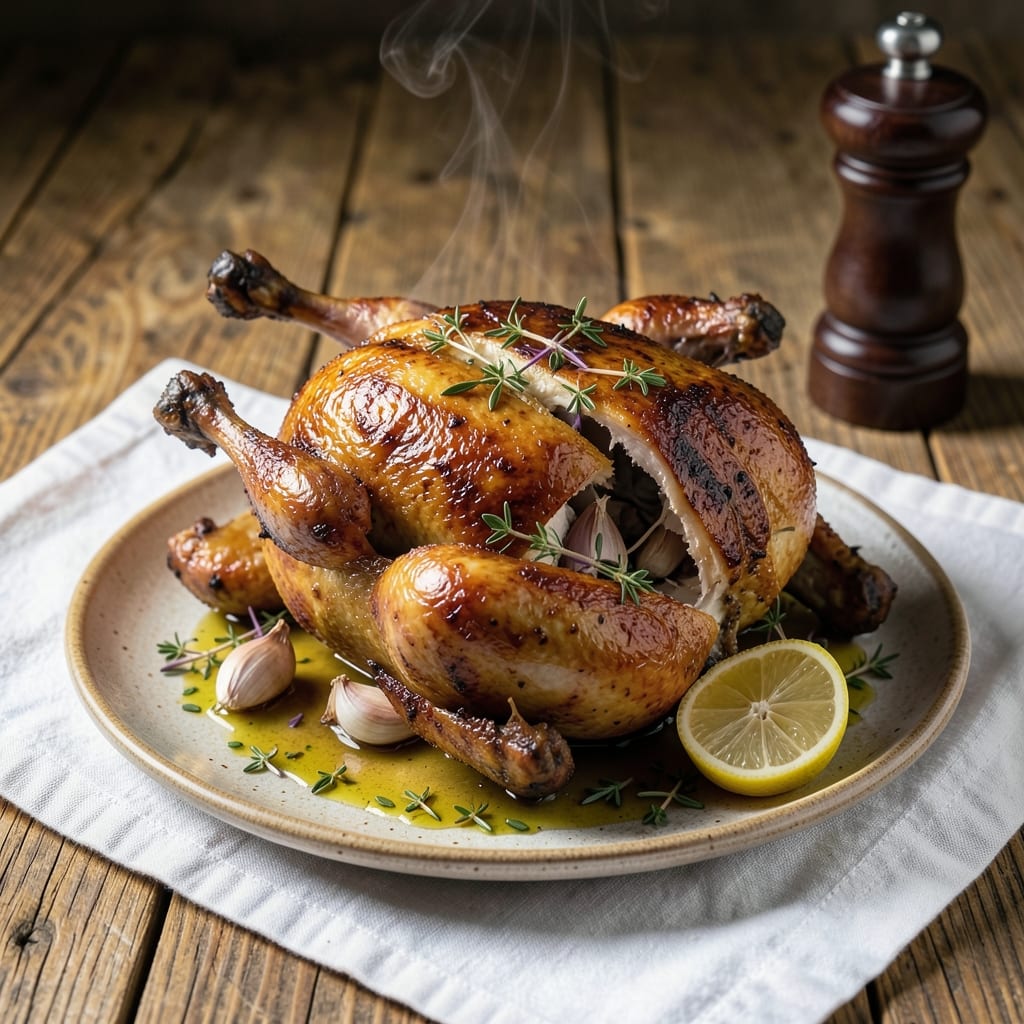
This authentic Greek roasted chicken brings the flavors of a Greek taverna to your table with crispy skin and tender meat infused with lemon, garlic, and oregano. After years of perfecting my grandmother's method, I've cracked the code for achieving that signature golden crust and aromatic interior without a single shortcut. The secret lies in the marinade—where lemon juice tenderizes while garlic and herbs build layers of flavor that transform simple chicken into something extraordinary.
What makes this recipe truly authentic is the technique: chicken marinated overnight, then roasted at high heat until the skin becomes irresistibly crispy while the meat stays juicy inside. I use a blend of fresh oregano, lemon zest, and olive oil to create a crust that's both flavorful and texturally perfect. This isn't just another roasted chicken—it's a dish that transports you to a Greek island with every bite.
The result is restaurant-quality chicken with skin that shatters at the touch and meat so tender it falls apart easily. The aroma alone will have everyone gathering at your table, while the bright lemon-garlic flavor pairs beautifully with roasted potatoes or a simple Greek salad. This is the kind of meal that feels special without requiring hours of prep.
Whether you're serving for a family dinner or hosting a gathering, this recipe delivers professional results in your home kitchen. The key is patience—letting the chicken marinate and roast slowly creates flavors that develop deeply over time. Let's get started on creating your own taste of Greece.
Ingredients for authentic greek roasted chicken
Here's what you'll need to bring authentic Greek taverna flavors to your crispy roasted chicken.
| Ingredient | Amount | Notes |
|---|---|---|
| Whole Chicken 🍗 | 4 lb | Fresh, preferably free-range |
| Extra-Virgin Olive Oil 🫒 | ½ cup | High quality, fruity variety |
| Fresh Lemon Juice 🍋 | ½ cup | From 2-3 lemons, freshly squeezed |
| Garlic Cloves 🧄 | 8 cloves | Peeled, roughly chopped |
| Fresh Oregano 🌿 | ¼ cup | Chopped, stems removed |
| Fresh Thyme Leaves 🌿 | ⅛ cup | Chopped, stems removed |
| Lemon Zest 🍋 | 1 tbsp | From organic lemons |
| Salt 🧂 | 1 ½ tsp | Kosher or sea salt |
| Ground Black Pepper 🌶️ | ½ tsp | Freshly ground preferred |
| Dried Rosemary 🌿 | 1 tsp | Crushed between fingers |
| Honey 🍯 | 1 tbsp | For crispy skin |
| Fresh Bay Leaves 🍃 | 2 whole | For aromatics |
The chicken is everything here—look for a 4-pound free-range bird with good marbling for juiciness. I always grab mine from Whole Foods or my local butcher shop, where they can source fresher cuts. Organic lemons make a difference in both flavor and zest quality—skip the conventional ones. For olive oil, Kalamata brand is my go-to, but any high-quality extra-virgin works. Fresh oregano and thyme are non-negotiable; dried just won't give you that authentic Greek punch. If you can't find fresh, dried oregano at half the amount works in a pinch, but trust me on the fresh stuff.
No fresh rosemary? Dried works fine, but crush it between your fingers first to release the oils. Running low on bay leaves? Skip them entirely—they're more for aroma than flavor. The honey should be raw and unprocessed for that authentic touch, but regular honey works too. For the garlic, roasting it first (wrap whole cloves in foil at 400°F for 20 minutes) brings out deeper flavors, but raw works perfectly fine. If you're prepping ahead, marinate the chicken overnight for maximum flavor infusion—just don't skip the high-heat roast for that crispy skin.
Marinated chicken keeps well in the fridge for up to 2 days if you're prepping ahead. For the fresh herbs, wrap them in damp paper towels and store in a sealed container—they'll last 3-4 days that way. The zest and lemon juice can be prepped 1 day ahead and stored in the fridge. Once roasted, the chicken reheats beautifully—just cover with foil and warm at 350°F for 15-20 minutes. Leftovers make fantastic sandwiches the next day, and the bones are perfect for Greek-style chicken soup if you've got any scraps.
Why You'll Love This Recipe
- Fewer Tools Needed: I swear by this recipe because it’s one-pan magic. No fancy gadgets—just a sheet tray, a knife, and 20 minutes of hands-off roasting. That’s it. The lemon and olive oil do all the work while you sip coffee or scroll through your phone.
- Crispy-Golden Magic: Between us, the secret’s in the olive oil and garlic—roasted until the skin crackles like autumn leaves. The oregano? It’s the finishing touch that turns good into "why didn’t I make this sooner?" The juices pool at the bottom of the tray, and every bite is pure, savory happiness.
- Leftovers That Shine: This chicken doesn’t just feed a crowd—it rewards you later. Shred it for souvlaki the next day, toss it into salads, or serve it cold in pita pockets. Honestly, I’ve had it three days in a row and still crave it. (Yes, even on a Tuesday night.)
- Budget-Friendly Hero: A whole chicken costs less than takeout for two, and the ingredients? You’re probably already stocked. The olive oil and lemon feel luxurious, but they stretch the flavor so the whole bird tastes like a restaurant dish. My wallet and my taste buds thank me every time.
Step-by-step instructions for authentic Greek roasted chicken
Here's how to create that signature crispy, herbed Greek roast with juicy meat inside.
Prepare the Chicken for Maximum Crisp
Start by removing the chicken from the refrigerator and letting it sit at room temperature for 30 minutes. This ensures even cooking. Pat the entire chicken completely dry with paper towels—get into every crevice, especially the cavity and under the wings. Moisture is the enemy of crispy skin, and this step makes all the difference.
Make the cavity by removing the giblets and neck (if present), then rinse the cavity with cold water and pat it dry. This keeps the meat tender while creating that signature crispy exterior. Place the 2 whole fresh bay leaves inside the cavity for subtle aromatic depth.
Create the Herbed Lemon-Garlic Marinade
In a small bowl, combine the 0.5 cup extra-virgin olive oil, 0.5 cup fresh lemon juice, 1 tbsp lemon zest, 1 tbsp honey, 1.5 tsp salt, and 0.5 tsp ground black pepper. Whisk until fully emulsified—the oil should become cloudy from the lemon's acidity. This marinade will create that signature crispy skin while infusing the meat with bright citrus flavor.
In a separate bowl, mix the 8 cloves garlic cloves (roughly chopped), 0.25 cup fresh oregano, 0.125 cup fresh thyme leaves, and 1 tsp dried rosemary (crushed between fingers). Rub this herbed mixture all over the chicken, including inside the cavity. The fresh herbs will release their aromatic oils, while the garlic and lemon create that unmistakable Greek flavor profile.
Roast for Crispy Skin and Juicy Meat
Preheat your oven to 425°F with a rack positioned in the middle. Place the chicken breast-side up on a wire rack set over a rimmed baking sheet (no need for extra oil—the marinade provides enough fat). Roast for 45 minutes, then reduce heat to 375°F and continue roasting for another 45-60 minutes, or until the internal temperature reaches 165°F in the thickest part of the thigh.
Here's the secret: I like to baste the chicken every 20 minutes with the pan juices using a basting brush. This keeps the skin moist while it crisps, preventing it from drying out. You'll know it's done when the skin is deep golden brown and crispy, and the juices run clear when you pierce the thigh with a meat thermometer.
Rest and Serve with Confidence
Transfer the chicken to a cutting board and tent loosely with aluminum foil. Let it rest for 15-20 minutes before carving. This resting period is crucial—it allows the juices to redistribute throughout the meat, ensuring every bite stays moist and flavorful. During this time, you can make a quick pan sauce by deglazing the baking sheet with a splash of water and scraping up the browned bits.
Carve the chicken against the grain for tender slices. The skin should be perfectly crispy, the meat juicy and tender, and every bite infused with bright lemon, garlic, and fresh herbs. Serve with lemon wedges on the side and warm pita bread for the ultimate Greek dining experience.
Pro Tips For Making Authentic Greek Roasted Chicken
- Dry the Chicken First: Pat that bird thoroughly—no wet spots on the skin. I learned this the hard way when my chicken steamed instead of browned, and the crust turned sad and limp. Works best if you do it 30 minutes before roasting, letting it air-dry uncovered on a rack.
- Crush Those Garlic Cloves: Don’t just chop—smash the garlic cloves flat with the side of your knife first. This releases more flavor into the olive oil, and it caramelizes better when roasted. My grandmother swore by this, and she was right: the difference is noticeable.
- Start High, End Low: Roast at 425°F (220°C) for the first 20 minutes to kickstart the crust, then drop to 375°F (190°C). I used to skip this, and my chicken ended up either burnt outside or raw inside. The lower temp finishes it gently without drying it out.
- Use Lemon Zest, Not Just Juice: Zest the lemon first, then juice it—sprinkle the zest over the chicken before roasting. The oils in the zest infuse into the skin, adding a bright, aromatic layer. I was skeptical until I tried it: the flavor is deeper, almost like a hidden citrus perfume in every bite.
Serving suggestions for this recipe
Greek Salad Essentials
No Greek roasted chicken is complete without a classic Horiatiki salad—the crisp, bright flavors cut through the richness perfectly. Toss together 2 cups chopped cucumber, 1 pint cherry tomatoes, 1 red onion (thinly sliced), ½ cup Kalamata olives, and ¼ cup crumbled feta cheese. I always add 2 tbsp extra-virgin olive oil and 1 tbsp red wine vinegar with a pinch of oregano and salt. The acidity from the vinegar and tang from the feta make this salad a must-have side. 🥗
Roasted Potatoes
For a heartier option, try crispy roasted potatoes that pair beautifully with the chicken. Toss 2 lbs baby potatoes (halved) with 2 tbsp olive oil, 1 tsp dried oregano, ½ tsp garlic powder, and 1 tsp salt. Roast at 425°F for 30-35 minutes until golden and tender. The earthy flavors complement the lemony chicken while adding a satisfying crunch. I like to serve them alongside the chicken for a complete meal.
Warm Pita Bread
No Greek meal is complete without warm, soft pita bread. I love toasting 4-6 pita rounds in a dry skillet over medium heat for 1-2 minutes per side until puffed and golden. Brush with a little olive oil and sprinkle with flaky sea salt while still warm. The pita soaks up any juices from the chicken and adds a comforting texture to the plate. For extra flavor, add a smear of tzatziki or a dollop of hummus on the side.
Lemon-Aioli Sauce
Elevate your chicken with a simple lemon-aioli sauce that’s quick to make and packed with flavor. Mix ½ cup mayonnaise with 1 tbsp fresh lemon juice, 1 tsp lemon zest, 1 minced garlic clove, and a pinch of salt. Drizzle this bright, creamy sauce over the chicken just before serving. It adds a luxurious touch without overpowering the herbed flavors. I often serve it in a small bowl for dipping or drizzling.
Grilled Vegetables
For a lighter, veggie-packed side, grill zucchini, bell peppers, and eggplant until tender and slightly charred. Toss them with 2 tbsp olive oil, 1 tsp dried oregano, and a sprinkle of salt. The smoky char from grilling adds depth that pairs wonderfully with the chicken’s crispy skin. Serve warm alongside the chicken for a balanced, flavorful plate. This is especially great for summer dinners when you want to keep things fresh and light.
Dessert: Baklava Bites
No Greek meal is complete without something sweet, and baklava bites are the perfect way to end the feast. I use store-bought phyllo dough layered with a mix of walnuts, honey, and cinnamon, then baked until golden. Serve them warm with a dusting of powdered sugar and a cup of strong Greek coffee. The nutty, honeyed flavors provide a satisfying contrast to the savory chicken. If you’re short on time, even a simple orange and walnut cake** will do the trick—just slice it and serve with a dollop of whipped cream.
Nutrition facts
Frequently asked questions
Can I use bone-in chicken thighs instead of a whole chicken?
Bone-in thighs work beautifully for this recipe. Use about 6-8 bone-in thighs (about 4 pounds total) and follow the same marinating and roasting instructions. The skin on thighs crisps up even better than breast meat, and they stay juicier during roasting. Just reduce the roasting time by 10-15 minutes since thighs cook faster than breast meat.
How do I get that perfect crispy skin without drying out the chicken?
The secret is in the prep: pat the chicken completely dry before marinating, and roast it on a wire rack (not directly on the pan). Start at 425°F for 45 minutes to render fat and crisp the skin, then lower to 375°F to finish cooking. Baste with pan juices every 20 minutes—this keeps the skin moist while it crisps.
Can I make this ahead of time for a dinner party?
Yes! Marinate the chicken 1-2 days ahead and store it uncovered in the fridge. On the day of cooking, roast it as directed (it may take slightly less time since it's already marinated). Keep the chicken warm in a 200°F oven while you finish sides. The flavors actually deepen with extra marinating time!
What's the best way to reheat leftovers?
Reheat leftovers gently to avoid drying out the skin. Cover with foil and warm at 325°F for 15-20 minutes until heated through. For crispy skin, broil for 2-3 minutes at the end. Leftovers taste best within 2 days—after that, use them for soups or salads where texture matters less.
Can I substitute dried herbs for fresh ones?
You can, but fresh herbs give that authentic Greek flavor. If using dried, reduce to 1/3 the amount (e.g., 1/3 tsp dried oregano for 1 tsp fresh). For best results, crush dried herbs between your fingers to release their oils. Fresh herbs like oregano and thyme are worth seeking out for this recipe—they make a noticeable difference!